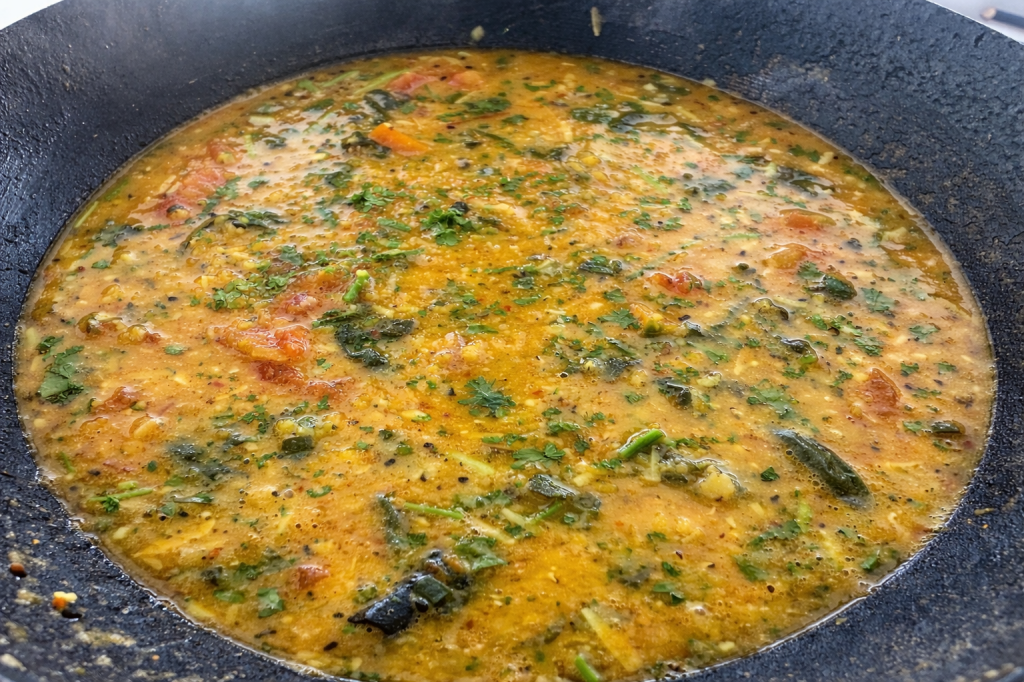
There was a time when I barely noticed meals like this. They felt so ordinary that I simply expected them to appear on the table. They were just part of everyday life. Only later did I realize how much I missed them. Now, I find myself making this dal again and again, especially on days when I want something deeply comforting instead of elaborate. As I began cooking it myself, I came to appreciate how beautifully the lentils, vegetables, and gentle spices come together. Nothing overpowers the other. Everything works in harmony. This is the kind of food that is warm, nourishing, gently spiced, and unmistakably Bengali.
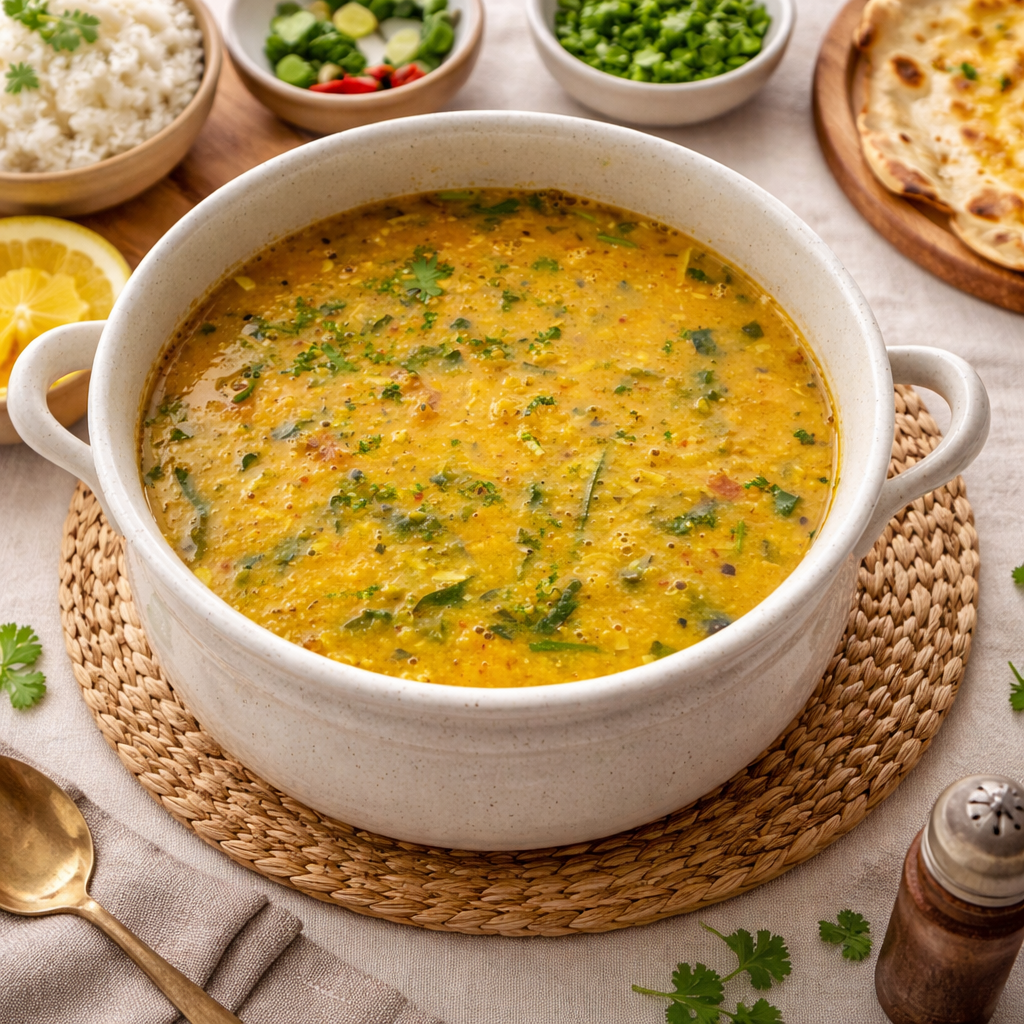
Serve this Sobji Dal with plain steamed rice and, if you can find it, a squeeze of fragrant gondhoraj lebu. It brightens the dish without taking away from its simplicity. The beauty of this recipe is that it’s wonderfully adaptable. Use whatever vegetables you have on hand, whether they’re fresh from the market, tucked away in the refrigerator, or waiting in the freezer @sarchakra
PREP TIME: 20 mins
COOK TIME: 35 mins
SERVES: 6-8
Ingredients
- Mung dal 1 cup, rinsed
- Cauliflower florets 2 cups
- Green peas 1 cup
- Green beans ½ cup, chopped
- Carrot 1, chopped
- Onion 1 small, finely chopped
- Tomato 1, finely chopped
- Ginger paste 1 tbsp
- Garlic paste 2 tsp
- Green chilies 3–4, chopped
- Mustard oil 2 tbsp
- Ghee 2 tbsp + 1 tsp, divided
- Cumin seeds 2 tsp
- Bay leaf 1, broken
- Asafoetida a pinch
- Coriander powder 1 tbsp
- Red chili powder 2 tsp
- Bengali garam masala ½ tsp
- Cashews 6-7
- Raisins 6-7
- Salt to taste
- Turmeric to taste
Method
- Add the rinsed mung dal to a pressure cooker with salt, turmeric, and 3 cups of water. Pressure cook for 2-3 whistles until soft but not mushy. Let the pressure release naturally. Lightly whisk the dal to even out the texture.
- In a pan, add cauliflower, peas, beans, and carrot along with ½ cup water, salt, and a pinch of turmeric. Cook for 2-3 mins until just tender. Do not drain-set aside with the cooking liquid.
- Heat 1 tsp ghee in a small pan. Fry the cashews and raisins until golden and plump. Remove and keep aside.
- In a large pan, heat mustard oil until it just begins to smoke. Lower the heat and add 1 tbsp ghee. Add a pinch of salt, asafoetida, cumin seeds, and bay leaf. Let the cumin splutter.
- Add ginger paste, garlic paste, and green chilies. Sauté until the raw aroma disappears. Add the onion and cook until soft and translucent, not browned.
- Add chopped tomato and salt. Cook until the tomato breaks down and releases oil. Add coriander powder and red chili powder. Sprinkle a little water so the spices cook gently without burning. Keep the heat medium-low.
- Add the cooked dal and the par-cooked vegetables along with their liquid. Mix well. Cover and simmer for 5-6 mins so everything comes together.
- Stir in the fried cashews, raisins, Bengali garam masala, and remaining 1 tsp ghee. Cover and rest for a minute before serving.
Notes
Dal Variations (swap the lentil)
Split moong + masoor (50:50) for a creamier body, and slightly deeper color.
Arhar (toor) dal cooks starchier and thicker than yellow mung. It breaks down more, so the liquid becomes denser, slightly creamy without being smooth. It is also more filling. Increase ginger, and add a touch more mustard oil to balance the richness.
Cholar dal style twist- if using split chana dal, omit the tomato entirely. Add coconut slivers and a pinch of sugar. Finish with ghee-heavy tempering.
You can dry roast the mung dal until lightly golden and nutty before pressure cooking. This adds depth and a faint smokiness.
A slighter different technique would be to cook the dal separately, then temper the spices, cook the vegetables fully in the masala, and lastly fold in the dal at the end.
Finish with a second tadka of ghee + cumin + dried red chilies poured on top just before serving. Aromatic and dramatic.
Don’t whisk the cooked dal. Keep it textured and spoonable, almost stew-like.
Add lauki, pumpkin, or ridge gourd for sweetness
Finish with raw mustard oil (½ tsp) for bite and a pinch of sugar.
Skip garlic completely and double the ginger. Add a splash of lemon juice at the end.
For a Winter Dal version, add radish or turnip, increase the green chilies and finish with crushed black pepper and ghee
For a richer version add more cashews, raisins and extra ghee. A touch of cream or malai in the end is a perfect luxurious touch.
For a soupy consistency add hot water at the end, adjust salt, and give a quick boil.
For a thicker consistency reduce the liquid by simmering uncovered for 3-4 mins.
For a vegan version, use oil instead of ghee.
If you try a recipe, please use the hashtag #sarchakra on INSTAGRAM for a chance to be featured!
FOLLOW SARCHAKRA ON FACEBOOK| INSTAGRAM | PINTEREST | TWITTER I TIKTOK FOR ALL OF THE LATEST CONTENT, RECIPES AND UPDATES.


This is fantastic! I love all of the different spices and seasoning ingredients!
LikeLiked by 1 person
Thank you MimI. This is truly a wonderfully flavorful dish and needs very little else as an accompaniment. Glad you enjoyed it ❤️
LikeLike