Chinese dumplings, also known as jiaozi, originated in China. They have been around for thousands of years and are a staple in Chinese cuisine. This versatile food has not only withstood the test of time, it has also evolved with changing times. The origin of Chinese dumplings can be traced back over 1800 years ago to the Eastern Han Dynasty (25-220 AD) in China. Legend has it that Zhang Zhongjing, a famous physician in the Han Dynasty (206 BC – 220 AD), invented the dumpling as a remedy for frostbites and a way to cure colds and keep warm during the harsh winter months. Since then, Chinese dumplings have been an essential part of the Lunar New Year tradition and are commonly eaten during family reunions to symbolize wealth and good fortune.
These little pockets of deliciousness are made by wrapping a filling of minced meat, seafood or vegetables in a thin layer of dough, folding it into a crescent or semi-circle shape, and then steaming, boiling, or frying. The development of Chinese dumplings has been continuous, and the recipe has been passed down from generation to generation. Innovative variations of Chinese dumplings can be seen in both the fillings and the cooking method. Initially Chinese Dumplings were only eaten during the winter solstice festival. The original dumplings had a simple filling of mutton, radish, and herbs. Over time, the dumpling filling evolved to include pork, cabbage, shrimp, and mushrooms, among many other possibilities. As centuries passed, variations in the cooking methods and flavors emerged. During the Tang Dynasty (618-907), the use of sesame oil and vinegar as dipping sauces for dumplings became popular. In the Song Dynasty (960-1279), a new style of dumpling emerged in the South, made with thinner skins and filled with seafood like shrimp or crab. With the spread of Chinese cuisine worldwide, Chinese dumplings have become popular in many different countries with many variations. In the US, for example, Chinese-style dumplings can be filled with anything from cheese to pulled pork to sweet potatoes. One of the most creative developments in Chinese dumplings has been the use of different colors and shapes to create visually stunning dishes. As such, fillings can range from traditional pork and cabbage to seafood, vegetables, and even fruit. In some restaurants, you might find dumplings shaped like animals or flowers, or with bright colors derived from natural ingredients like beetroot, spinach, or squid ink.
The history and development of Chinese dumplings is a long and fascinating one, filled with centuries of tradition and countless creative innovations. Some popular fillings include pork and chives, chicken and mushroom, and shrimp and spinach. Vegetarian options include tofu and cabbage, and spinach and feta. For a twist, add some spices such as Sichuan pepper, chili flakes or fennel seeds. A popular innovation is to pan-fry the dumplings, also known as potstickers, to create a crispy texture. Another method is to boil the dumplings in a flavorful broth, known as hot pot dumplings. Eat this versatile dish as a snack, side dish or main course. It does require a little bit of practice but is so worth it. Whether you prefer them steamed, boiled, deep fried or pan-fried, there is no denying the simple pleasures of biting into a juicy, flavorful Chinese dumpling. You can make them ahead of time and freeze them so it is perfect for entertaining. Give this recipe a try and let me know what you think. Happy cooking! @sarchakra
PREP TIME: 40 mins
COOK TIME: 12 mins
YIELDS: Makes 20
Ingredients
Dough
- All purpose flour 250g
- Lukewarm water 150ml
Filling
- Mince pork 250g
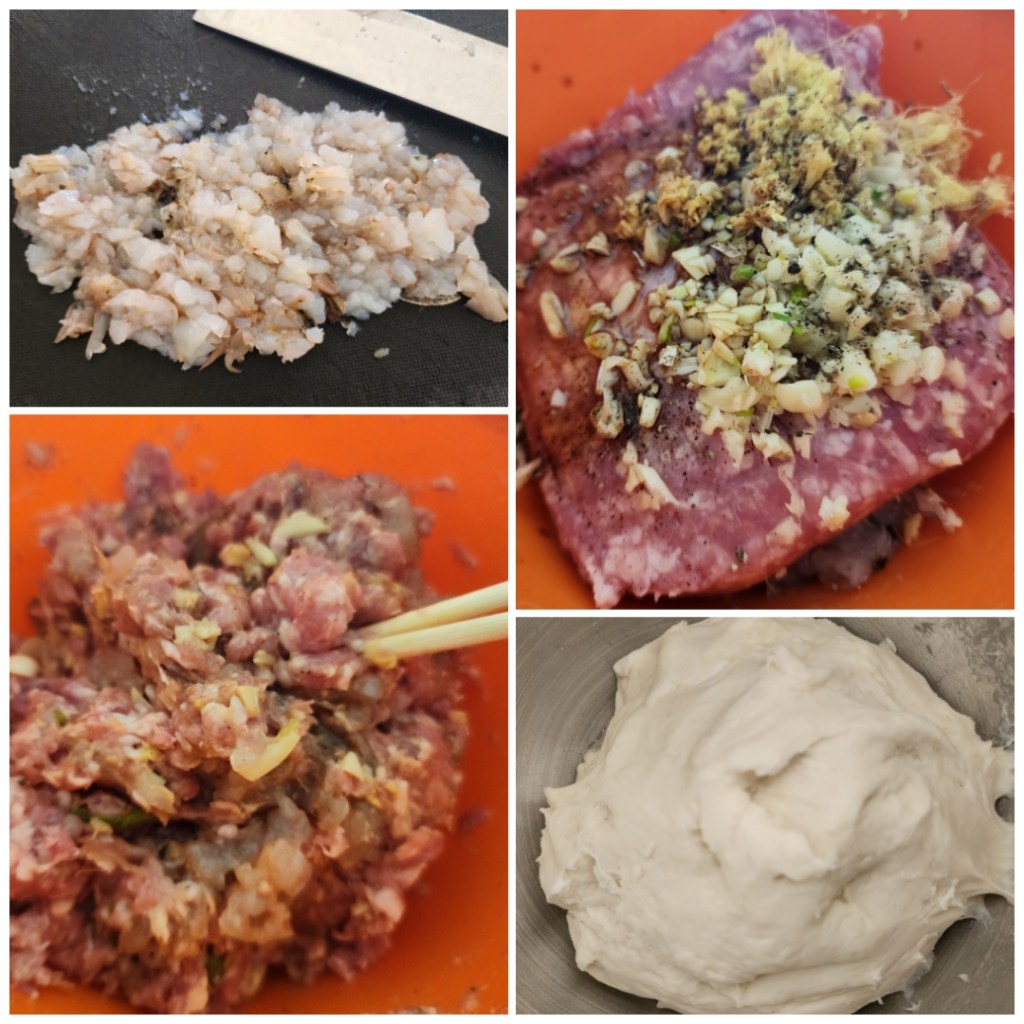
- Shrimp 200g (deveined and chopped finely)
- Ginger 1 tbsp, grated
- Garlic 1 tbsp, grated
- Soy sauce 2 tbsp
- Toasted sesame oil 2 tsp
- Salt a pinch
- Sugar 2 tsp
- Scallions 3 tbsp, chopped
For the Dough
- Mix the flour and water together in a bowl. Knead until the dough is smooth and elastic. Cover the dough and let it rest for about 30 minutes.
For the Filling
- Mix the minced pork and shrimp together in a bowl.
- Add some chopped scallions, grated ginger, chopped garlic, soy sauce, sesame oil, and a pinch of salt and sugar. Mix everything well.
Preparing the Dumplings
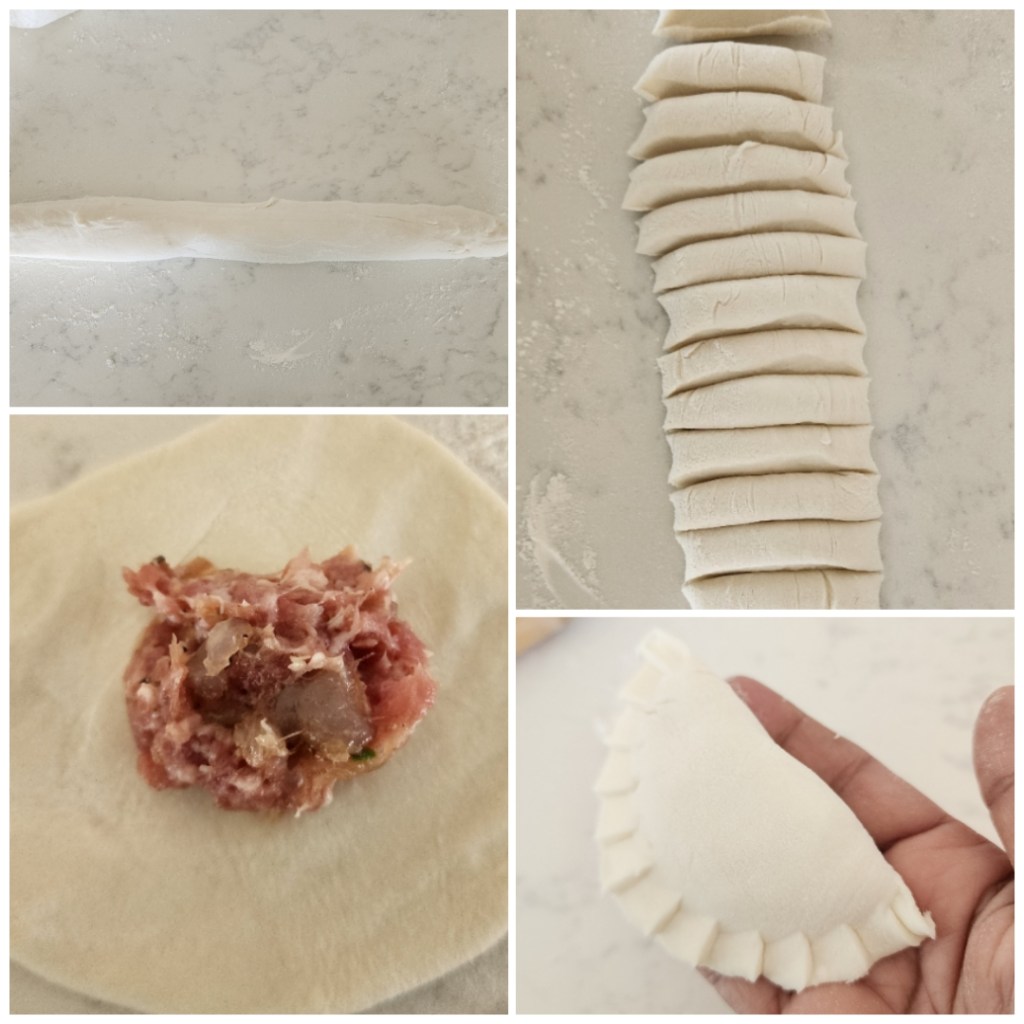
- After the dough has rested, it is time to make the dumplings. Roll the dough into a long snake-like shape and cut it into equal pieces.
- Roll each piece into a ball, and then use a rolling pin to flatten it into a round wrapper. The wrapper should be thin in the center and thicker around the edges.
- To fill the dumplings, place a spoonful of the filling in the center of each wrapper.
- Then, fold the wrapper in half and pinch the edges together to seal the dumpling. You can also crimp the edges to give it a pretty shape.
Cooking the Dumplings
You can boil the dumplings in a pot of salted water or steam them in a bamboo steamer. If boiling them, make sure the water is at a rolling boil before adding the dumplings. Put them in one by one and stir occasionally to prevent them from sticking together. Cook for about 5 minutes or until the dumplings float to the surface.
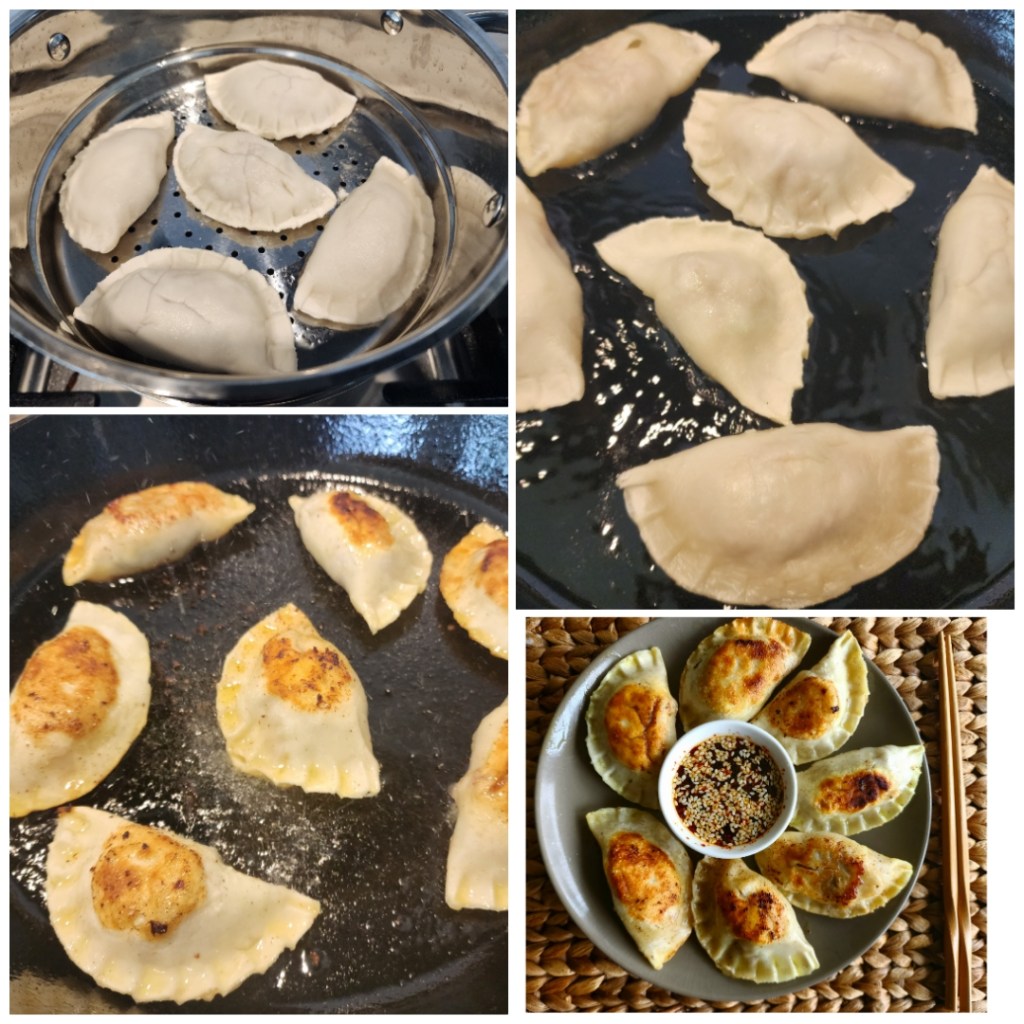
If you are steaming the dumplings, line the steamer with parchment paper to prevent sticking. Arrange the dumplings in a single layer and steam for about 10 minutes or until cooked through.
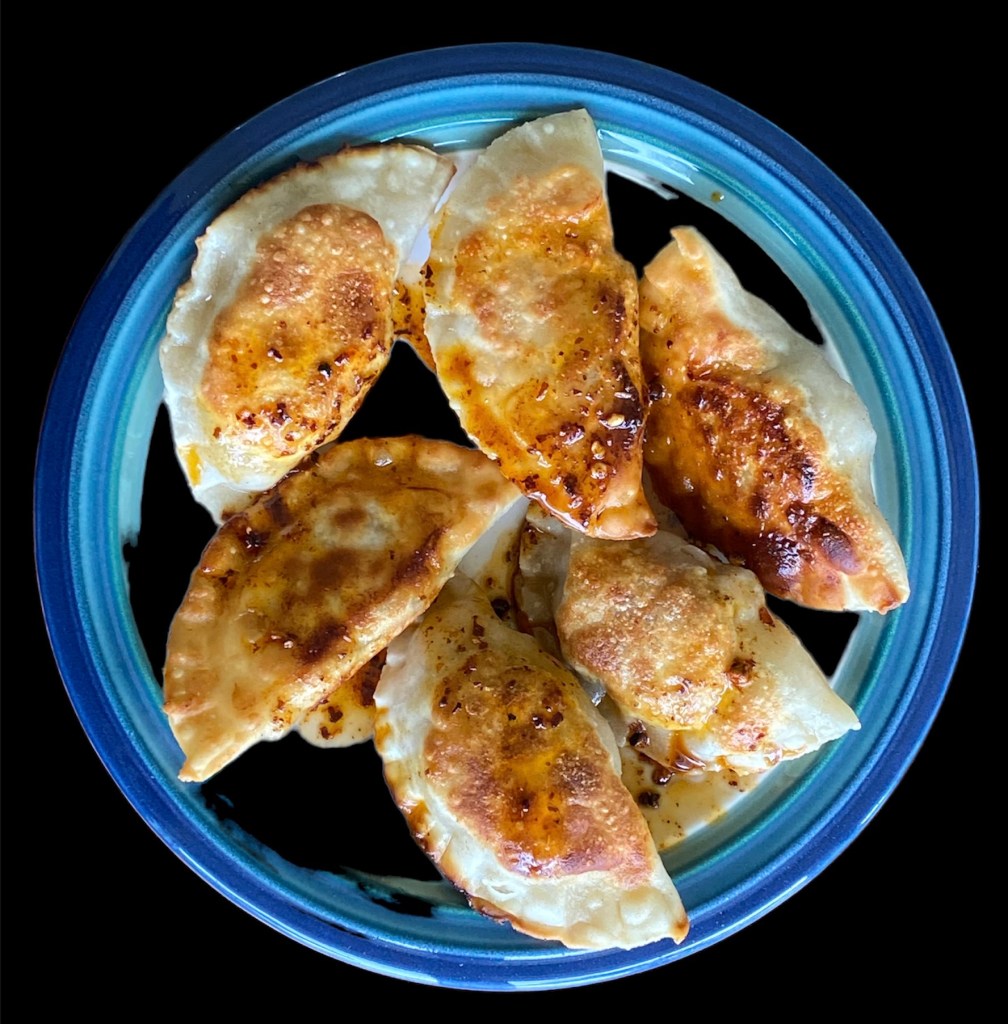
You can also pan fry the dumplings, after you have steamed them. Heat a little oil in the pan and fry the dumplings in batches for a 2-3 mins till slightly golden.
To Serve
- Serve the dumplings hot with some soy sauce, chili oil, or black vinegar.
- You can also garnish them with some chopped scallions and cilantro to add some freshness.
Notes
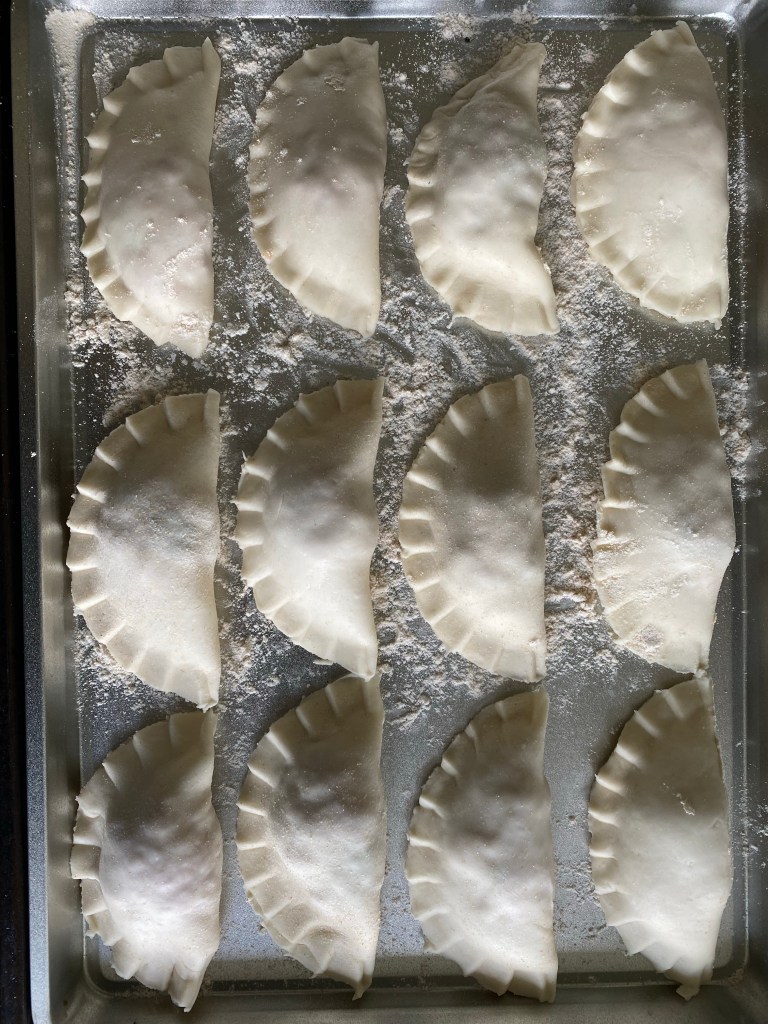
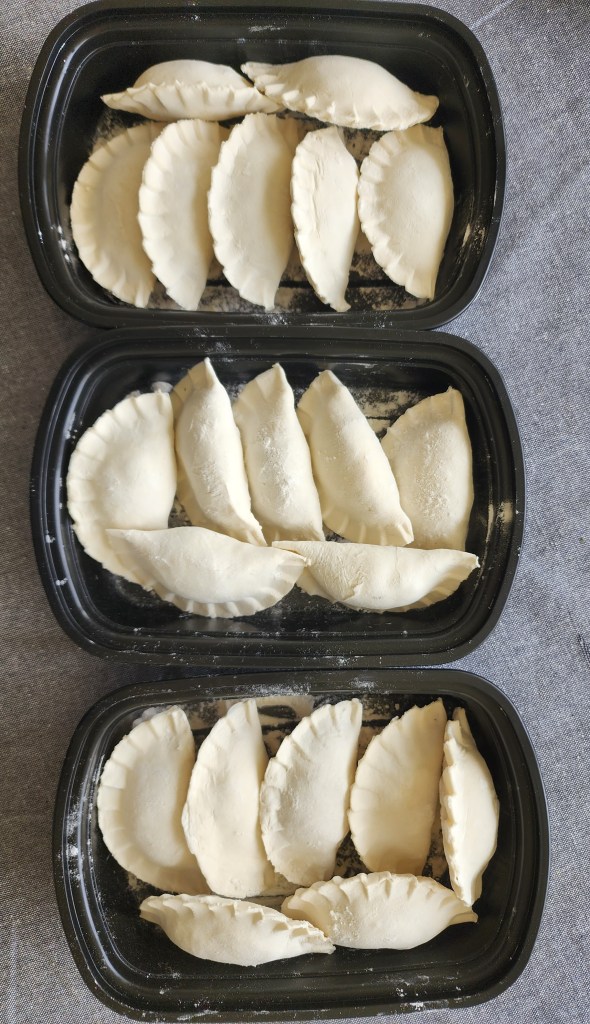
To freeze them, first place dumplings on a parchment paper lined tray so they do not touch each other. Pop them in the freezer. Once frozen, transfer the potstickers to a ziplock bag or plastic tubs and store in the freezer. Steam or panfry straight from the freezer! If you like this recipe check out Chinese Potstickers .
If you try a recipe, please use the hashtag #sarchakra on INSTAGRAM for a chance to be featured!
FOLLOW SARCHAKRA ON FACEBOOK| INSTAGRAM | PINTEREST | TWITTER I TIKTOK FOR ALL OF THE LATEST CONTENT, RECIPES AND UPDATES.