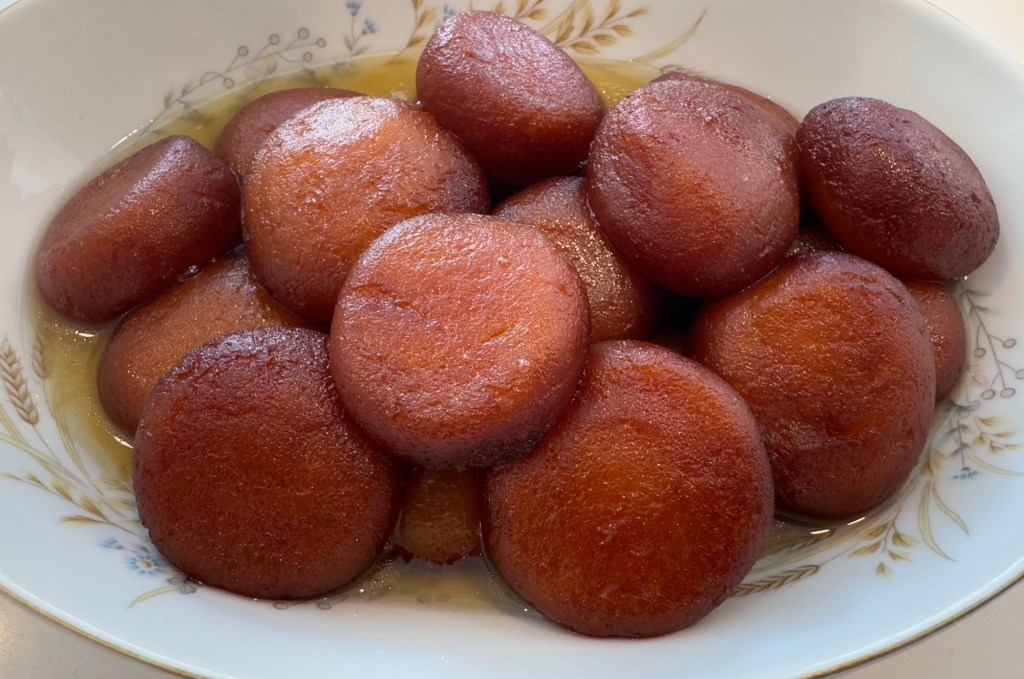
The exact origin of gulab jamun is uncertain. It is often linked to the medieval Middle Eastern sweet luqmat al-qadi, fried dough soaked in syrup, although the two differ in ingredients and texture. Gulab jamun belongs to the culinary history of the Indian subcontinent, with Persianate and Middle Eastern connections reflected in its name– gulab refers to rosewater, while jamun refers to the dark Indian fruit the sweet resembles. Today, it is part of the shared language of celebration across South Asia, served at weddings, festivals and family gatherings.
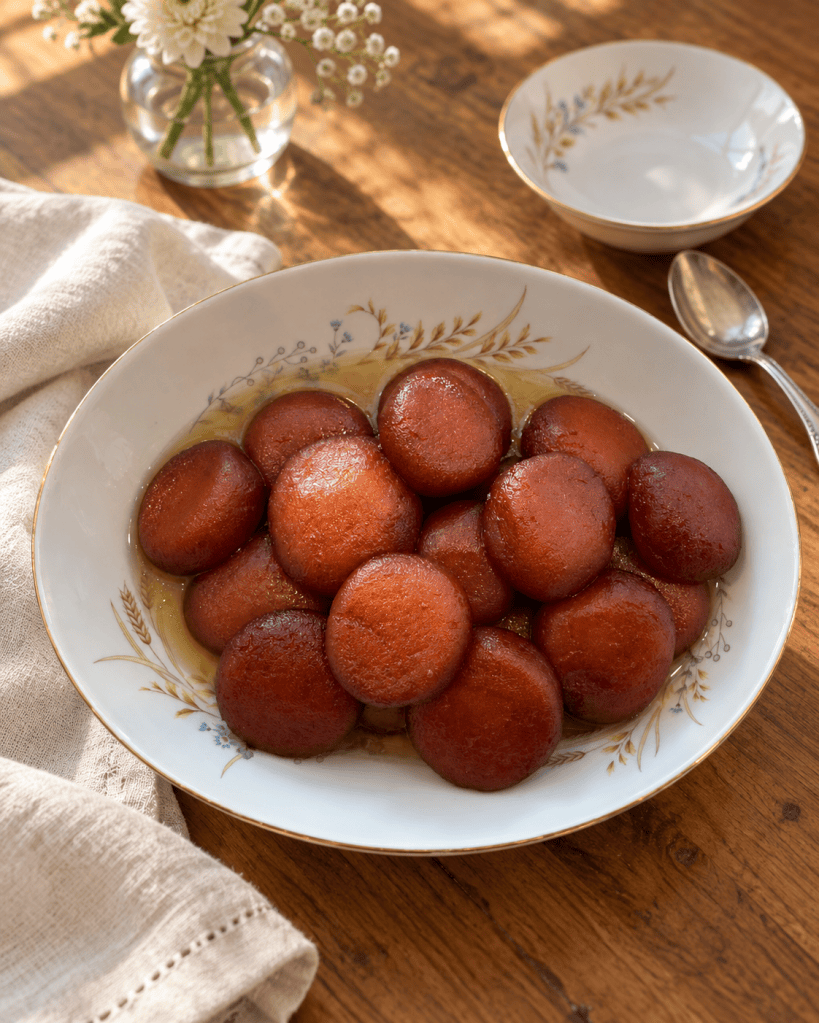
A good gulab jamun yields easily to a spoon, its golden-brown exterior giving way to a soft centre soaked in delicately fragrant syrup. The ingredients are modest, though turning them into smooth, evenly coloured jamuns can seem intimidating. Much depends on patience- gentle handling, slow frying and time for the syrup to reach the centre. Traditionally, the dough is made with khoya, milk slowly cooked down to concentrated milk solids. This version uses milk powder and is finished with a short cooking in the syrup before the jamuns are left to cool and absorb it @sarchakra
PREP TIME: 10 mins
COOK TIME: 60 mins plus soaking time
YIELDS: Makes about 20
Ingredients
For the syrup
- Sugar 2 cups
- Water 2½ cups
- Green cardamom pods 4, lightly crushed
For the jamuns
- Milk powder 1 ½ cups
- All-purpose flour ½ cup
- Baking powder 1 tsp
- Ghee 2 tbsp
- Milk up to ½ cup, added gradually
- Ghee 1 tsp, for greasing your hands
- Neutral oil, for deep-frying
Method
The syrup
- Combine the sugar, water and cardamom in a wide, deep pan. Bring to a boil, stirring occasionally until the sugar dissolves. Simmer briefly, then turn off the heat.
- The syrup should remain thin and pourable. There is no need to cook it to a thread consistency. Cover and set aside.
The dough
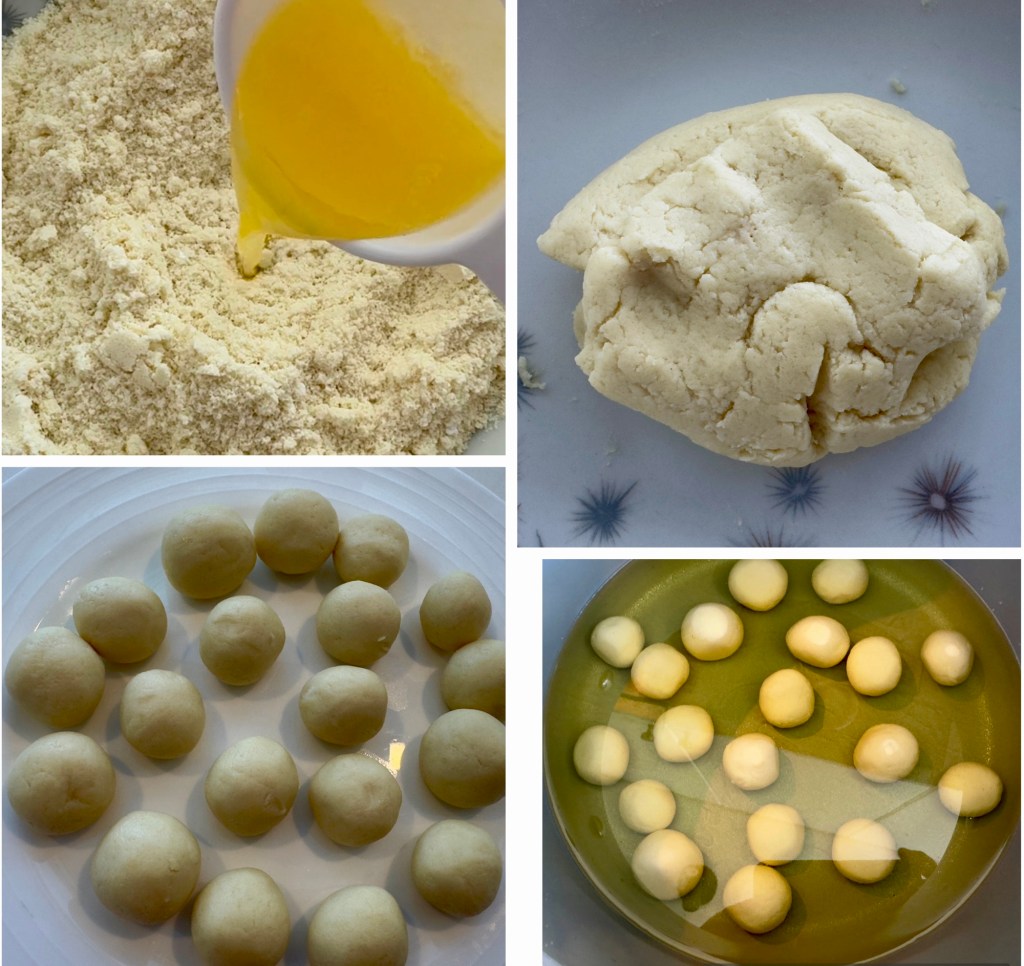
- Combine the milk powder, flour and baking powder in a bowl, breaking up any lumps.
- Add the ghee and rub it through the dry ingredients with your fingertips until evenly distributed.
- Add the milk gradually, mixing gently until you have a soft, smooth dough. You may not need the full amount, depending on the milk powder. Avoid kneading heavily or adding more milk once the dough comes together.
The jamuns
- Lightly grease your palms with ghee. Divide the dough into small, even portions and gently roll each one into a smooth ball without cracks.
- Keep them small, as they will expand during frying and again as they absorb the syrup. Keep the shaped balls covered while you work so their surfaces do not dry out.
Frying
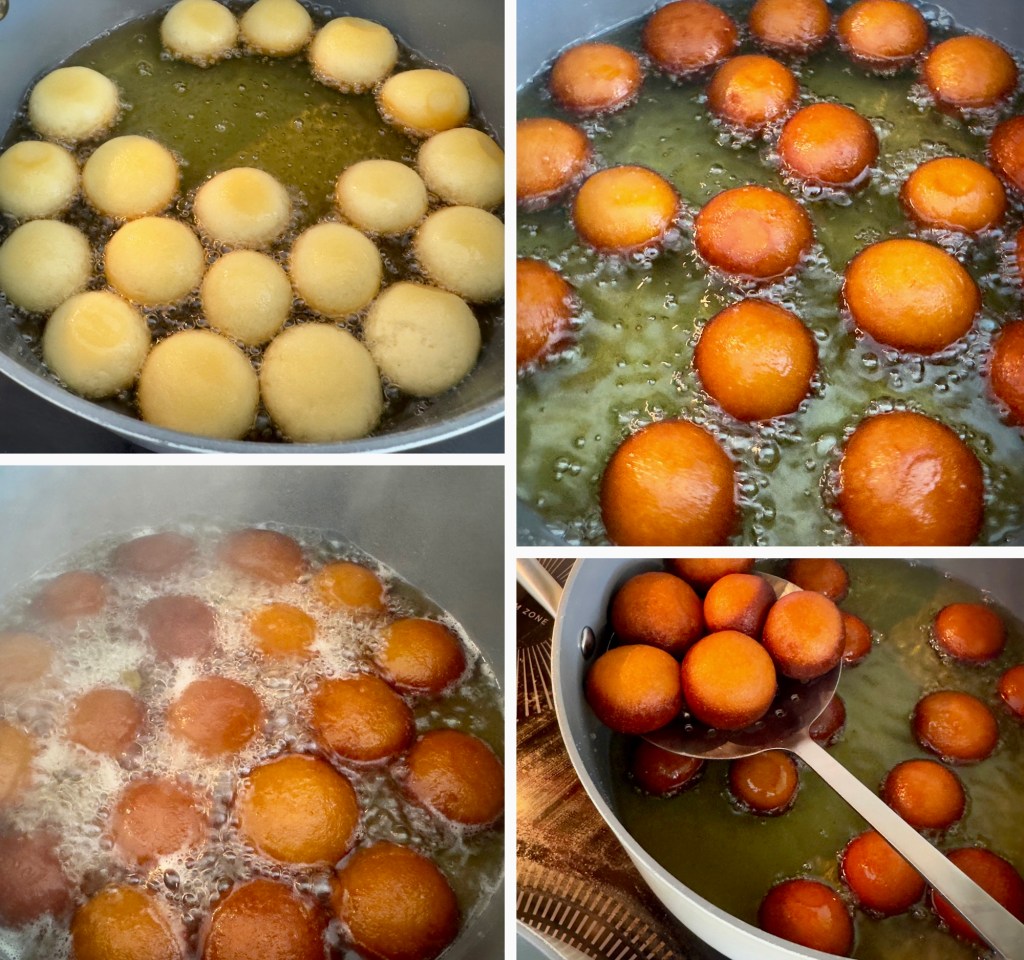
- Pour enough oil into a deep, heavy pan for the jamuns to float freely. Heat gently over low heat.
- Test with a tiny piece of dough- it should sink briefly, then rise slowly with gentle bubbling, without browning immediately. Never test the oil with your finger.
- Carefully lower the jamuns into the oil, leaving room for them to expand. Fry in batches if necessary.
- Allow them to begin firming before moving them. As they rise, gently nudge and turn them with a slotted spoon so they color evenly. Avoid pressing or piercing them.
- Keep the heat low and steady. If they brown quickly, the oil is too hot and the centres may remain undercooked. Fry until evenly deep golden brown, then lift out and drain briefly.
Cooking in the syrup
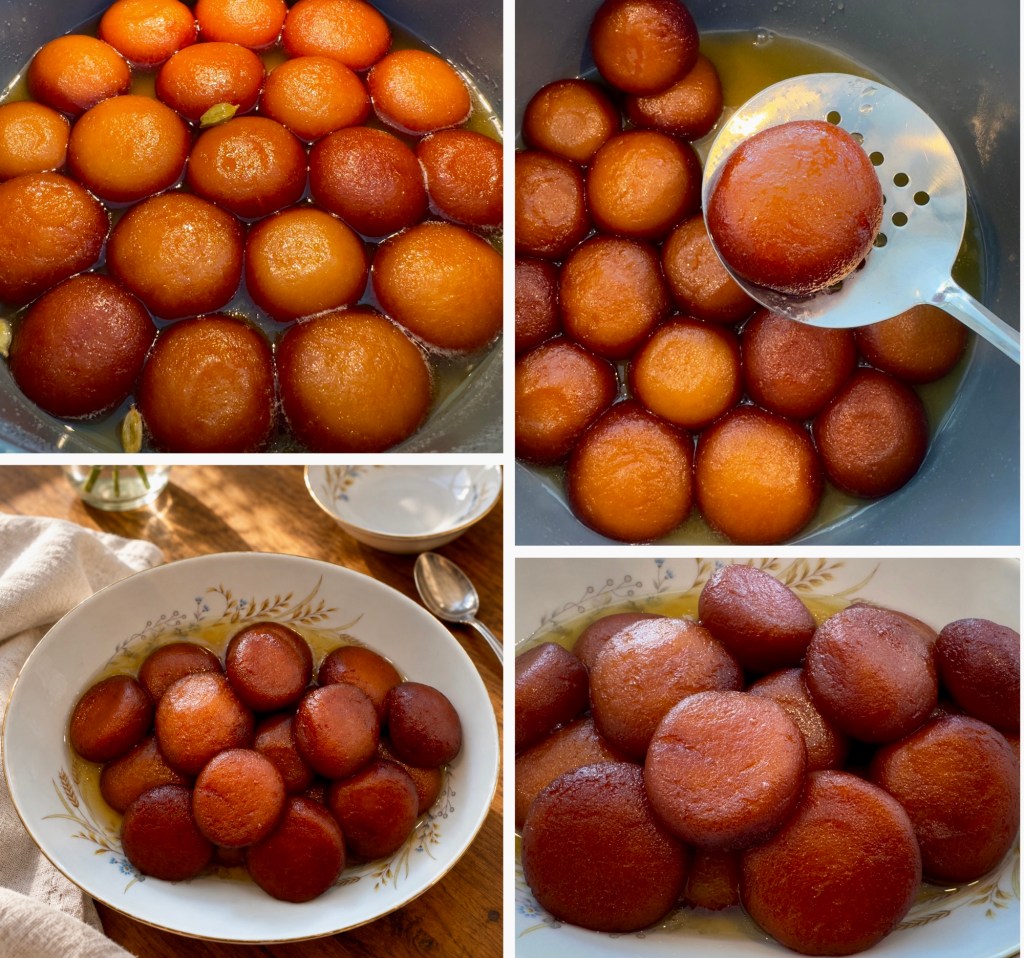
- Check that the syrup is warm rather than very hot before adding the freshly fried jamuns.
- Raise the heat and bring the syrup to an active but controlled simmer. Cook for 5 mins, avoiding a vigorous rolling boil that could damage the jamuns.
- Reduce the heat to low, cover and cook gently for another 4 mins.
- Turn off the heat and leave the jamuns to cool completely in the syrup, giving them time to absorb it.
Serve
Transfer gently to a serving bowl with a little syrup. Serve at room temperature or gently warmed.
Variations
Rosewater: Stir a little food-grade rosewater into the syrup after turning off the heat. Start sparingly, as strengths vary.
Saffron: Add a few saffron strands to the warm syrup.
Nuts: Finish with finely sliced pistachios or almonds.
Filled jamuns: Enclose a tiny amount of finely chopped pistachio and cardamom in each ball, sealing carefully.
Kala jamun: A darker relative, often made with a little sugar in the dough to deepen its color during frying. It needs its own adjusted method rather than simply frying this dough for longer.
Bengali relatives: Pantua and langcha belong to the same generous family of fried, syrup-soaked sweets, but their chhena-based doughs give them a distinct texture.
Can someone with diabetes eat gulab jamun?
A small portion may fit into an individual diabetes eating plan, but this remains a concentrated sweet. The syrup, flour and milk ingredients all contribute carbohydrates.
Making smaller jamuns and serving one with minimal extra syrup can help with portion control. Less syrup on the plate does not remove the sugar already absorbed. Honey, jaggery and coconut sugar are still sugars and do not make the recipe suitable by default.
A sugar substitute may reduce the added sugar, but it will change the syrup’s body and possibly its absorption. Use a separately tested recipe for that approach. Even a version with no added sugar still contains carbohydrates from the flour and milk. Portion size, total carbohydrate intake and individual glucose response matter.
If you try a recipe, please use the hashtag #sarchakra on INSTAGRAM for a chance to be featured!
FOLLOW SARCHAKRA ON FACEBOOK| INSTAGRAM | PINTEREST | TWITTER I TIKTOK FOR ALL OF THE LATEST CONTENT, RECIPES AND UPDATES.