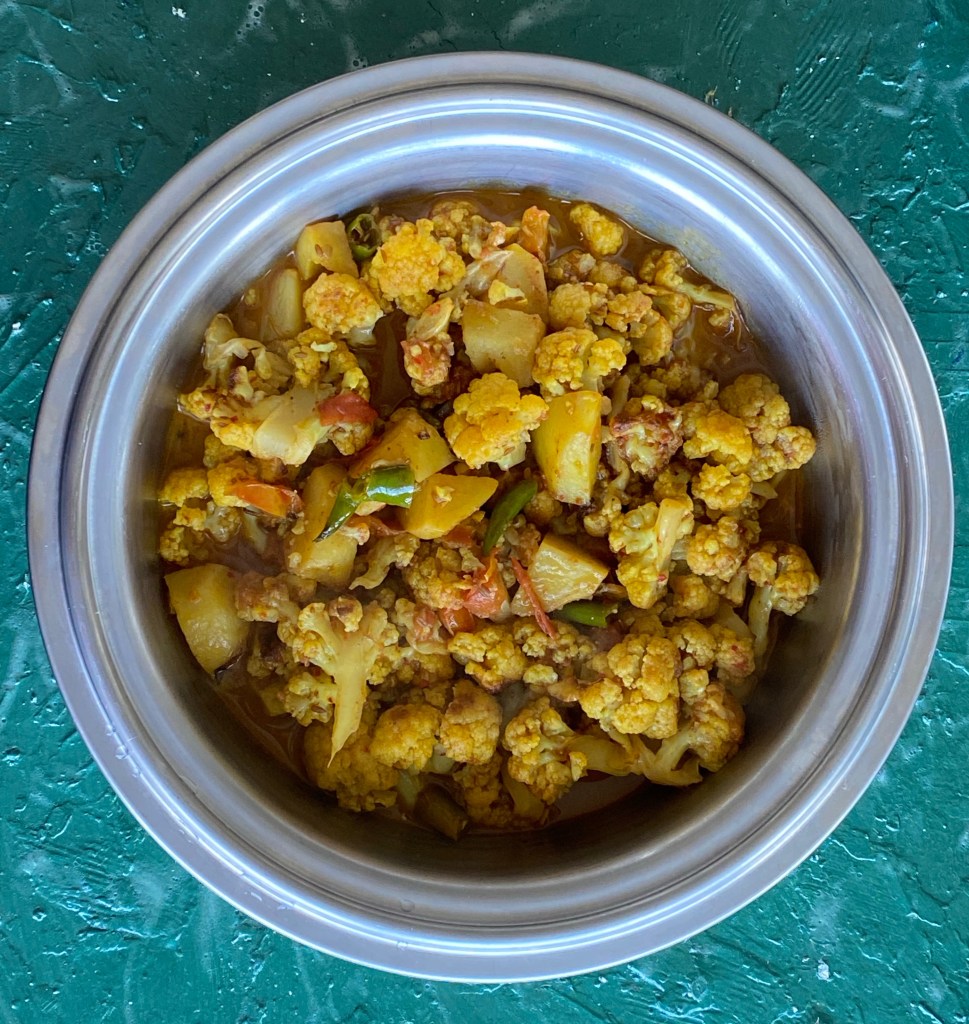
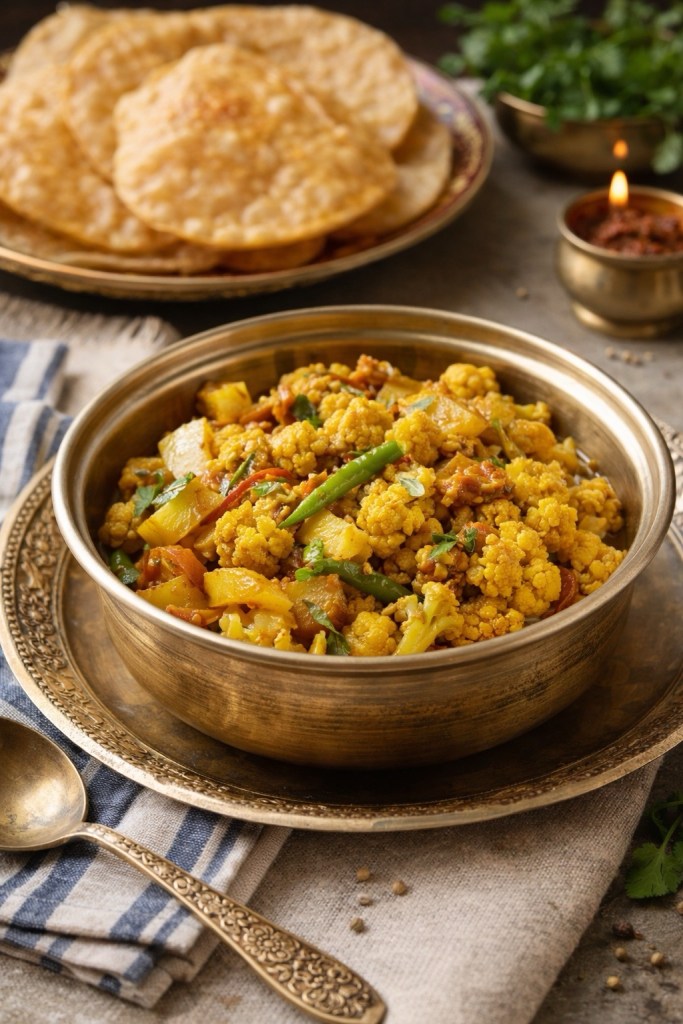
Phulkophir Niramish Dalna is a dish so familiar in a Bengali kitchen that its depth is often overlooked. ‘Niramish’ preparations, (vegetarian food) in a Bengali kitchen is shaped by ritual, season, and restraint. Made most often in winter, when cauliflower is dense and sweet, dalna is comfort food- a gently spiced gravy, and the unmistakable fragrance of Bengali whole garam masala blooming in mustard oil or ghee. The idea of niramish dalna emerges from Bengal’s Vaishnav and temple kitchens, where cooking without onion, garlic, or animal products wasn’t about lack, but about discipline – allowing vegetables and spices to speak without interference. When cauliflower arrived in Bengal during the colonial period, it fell in place in a Bengali kitchen easily, pairing naturally with potatoes, peas, and winter greens already central to the niramish repertoire. What distinguishes a dalna from preparations like ghonto or chorchori is its relationship with gravy. Dalna is neither dry nor soupy. The vegetables retain their structure as they are fried first and then simmered gently, where they take on the spices without losing form. In the case of cauliflower, the florets remain softened, but never collapsed.
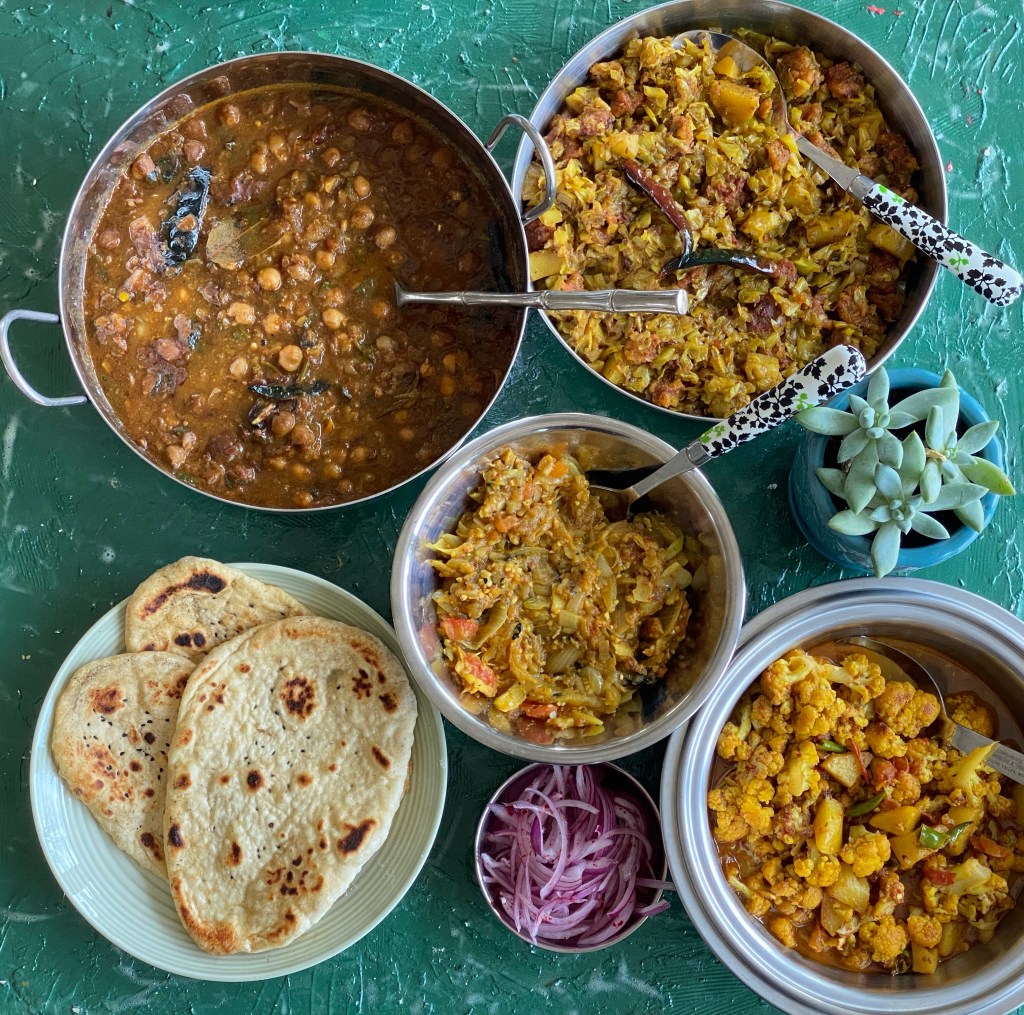
Across Bengali households, variations are subtle – green peas are added for sweetness, or a splash of ghee at the end. Sometimes tomatoes are kept out entirely, relying on ginger and whole spices alone. During certain religious observances, even garam masala may be skipped, resulting in an almost austere version that is deeply satisfying in its purity. In more everyday homes, the dalna becomes slightly richer, eaten with luchi, plain rice, or even leftover rotis the next day, when the flavours have settled and deepened. Phulkophir Niramish Dalna is not festive food in the obvious sense. It is weekday food, winter food, and food made without announcement. It is a perfect example of the Bengali instinct for balance in every bite. Not all dishes are meant to dazzle, but that doesn’t stop us from returning to it again and again @sarchakra
PREP TIME: 10 mins
COOK TIME: 20 mins
YIELDS: Serves 4
Ingredients
- Cauliflower 1, cut into florets
- Potato 1, cut into cubes
- Mustard oil 3 tbsp
- Asafetida a pinch
- Salt to taste
- Turmeric 2 tsp
- Red chili powder 2 tsp
- Bengali Garam masala 2 tsp
- Sugar 1 tbsp
- Roasted cumin powder 1 tbsp
- Green chilies 2-3, chopped
- Tomato 1, chopped
- Ghee 1 tbsp
Method
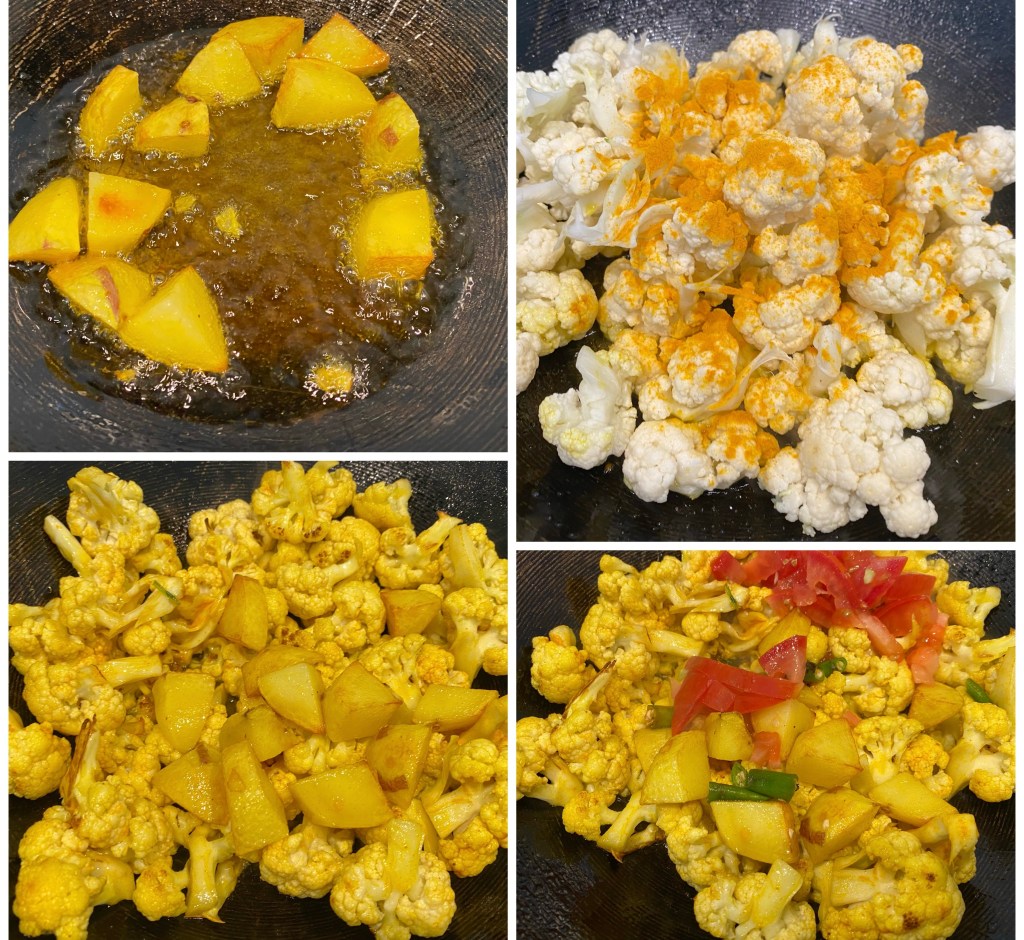
- Heat the pan. Add the cubed potato. Season with a little salt and turmeric. Fry till golden. Keep aside.
- Add the cauliflower florets to the pan. Season with salt and turmeric. Fry till golden.
- Add the fried potato back to the pan. Add asafetida, chopped tomato and chopped green chilies.
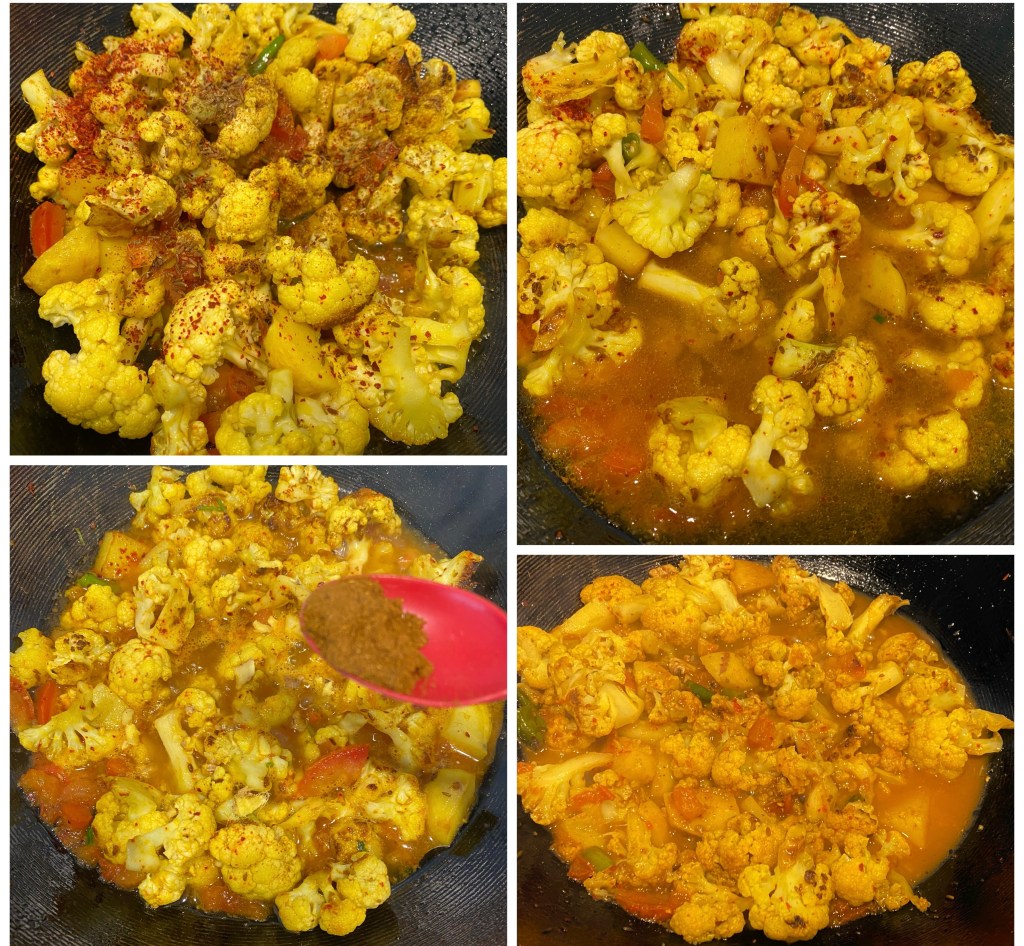
- Add roasted cumin powder and red chili powder. Fry for a couple of minutes till aromatic.
- Add ½ cup of water. Cover and cook till the vegetables are done. Do not overcook the cauliflower.
- Add Bengali Garam masala and sugar. Turn the heat off.
- Add ghee and mix. Serve with luchi.
Notes
If you like this niramish recipe try Bori diye Bandhakopi and Chanar Dalna (Indian Cottage Cheese with Potato Curry).
If you try a recipe, please use the hashtag #sarchakra on INSTAGRAM for a chance to be featured!
FOLLOW SARCHAKRA ON FACEBOOK| INSTAGRAM | PINTEREST | TWITTER I TIKTOK FOR ALL OF THE LATEST CONTENT, RECIPES AND UPDATES.
 sarchakra
I’ll take it! Thanks!
LikeLiked by 1 person
Thank you. Do try it sometime 🙋🏻♀️
LikeLike