I grew up in India, where okra, known locally as bhindi, was always cooked the traditional Indian way. It was a regular presence on our dining table, always prepared the Indian way, sautéed with onions, cumin, turmeric, and the usual suspects from an Indian spice box. I never questioned it. That was just how bhindi was supposed to taste. That was how I cooked okra even when we lived in London for many years. When we moved from London to Atlanta in 2008, I was introduced to an entirely different approach- the Southern way of cooking okra. To be honest, I hadn’t realized that okra was popular outside of India.To me, it was one of those vegetables you either grew up with or didn’t eat at all, possibly because of its infamous sliminess. In Indian cooking, we’re taught early- wash the okra before cutting, never after, or you will end up with a gooey mess. We learned tricks to tame it. But even then, bhindi was never the star dish. It played second fiddle to flashier options like cauliflower or paneer. So yes, it was a learning curve.
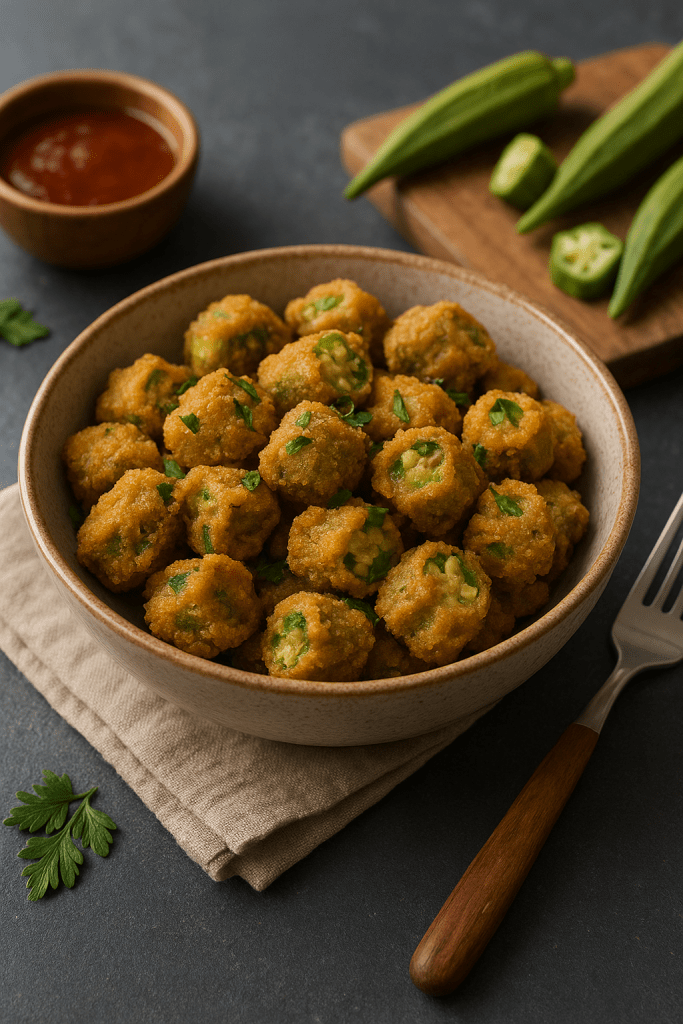
I quickly discovered that in the American South, the story of okra is deeply rooted in African history, the transatlantic slave trade, and the blending of food cultures. In Ethiopia or West Africa, okra had been cultivated for centuries. Known for its ability to grow in hot climates and poor soils, okra was, and still is, a staple in many African cuisines, used in soups, stews, and sauces for both its flavor and its thickening properties. It made its way to the Americas during the transatlantic slave trade in the 17th and 18th centuries. Enslaved Africans, forcibly brought to the New World, carried their agricultural knowledge, culinary traditions, and, in some accounts, even seeds braided into their hair or hidden in clothing. They began cultivating okra in the plantations and cooking it in ways that echoed home. Gumbo was a thick stew whose name is believed to come from the West African word for okra- ki ngombo (quingombo) in Bantu languages. In many early versions of gumbo, okra was used to thicken the stew, a technique still popular in Louisiana Creole cooking today. Okra thrived in the region’s hot, humid climate and Southern cooks, both Black and white, developed their own ways of preparing it. Fried okra, where slices are dredged in cornmeal and fried to a crisp came about at around this time. But it was in the kitchens of African American communities, particularly in the rural South, where okra remained a staple, connecting generations to their heritage. Through Reconstruction, Jim Crow, and the Civil Rights era, okra, along with other so-called ‘soul food’ ingredients like collard greens and black-eyed peas, held a place of cultural significance and resilience. So whether stewed in a gumbo, fried until golden, or pickled in a mason jar, okra in the South, is a story of migration, adaptation, and identity. In this recipe, okra is lightly battered and deep-fried until golden and crispy. It is nothing like the bhindi I knew growing up. The outside crackles between your teeth, the inside is soft, almost creamy, but not at all slimy. It is simple, satisfying, and totally addictive @sarchakra
PREP TIME: 30 mins
COOK TIME: 15 mins
YIELDS: Serves 5
Ingredients
- Okra 1 lb
- Buttermilk 1 cup
- Cornmeal 1 cup
- All-purpose flour 1 cup
- Paprika 2 tsp
- Garlic powder 2 tsp
- Onion powder 2 tsp
- Salt to taste
- Pepper 1 tsp
- Vegetable oil for frying
- Lemon wedges for serving
- Hot sauce or ranch dressing for dipping
Method
- Wash the okra thoroughly under cold water and pat them dry using a kitchen towel.
- Trim off the ends of the okra and slice them into ½ inch thick slices.
- Place the okra slices in a bowl and pour the buttermilk over them. Let them soak for about 30 minutes.
- In a shallow dish, combine the cornmeal, flour, garlic powder, paprika, garlic powder, onion powder, salt, and black pepper.
- Once the okra has marinated, drain off any excess buttermilk.
- Dredge the okra slices in the seasoned flour mixture, making sure to coat each slice thoroughly.
- To ensure the okra retains its bright green color, preheat your oven to 200°F (93°C) and place a wire rack over a baking sheet. As you coat each slice of okra, place them on the wire rack. This will allow air to circulate around the okra and prevent them from becoming soggy.
- Heat vegetable oil in a deep skillet or frying pan over medium-high heat.
- Once the oil is hot (around 350°F/175°C), carefully add the coated okra slices in batches. Do not to overcrowd the pan.
- Fry the okra until golden brown and crispy, about 3-4 minutes per batch.
- Use a slotted spoon to transfer the fried okra onto a plate lined with paper towels to drain off any excess oil.
- While frying in batches, keep the first batch warm in the preheated oven while frying the remaining okra. Serve hot with lemon wedges as a side dish or snack. For an extra kick, serve with hot sauce or ranch dressing for dipping.
Notes
- Marinating the okra in buttermilk helps to tenderize the okra, enhances its flavor and reduces its chewiness. It also helps retain the vibrant green color.
- Make sure the oil is hot enough before adding the okra to get a crispy texture.
- Avoid overcrowding the pan while frying to ensure even cooking and crispiness.
- Using a combination of cornmeal and flour in the coating adds extra crunch to the okra.
- For extra flavor, experiment with different seasonings such as cajun seasoning or Old Bay seasoning.
If you try a recipe, please use the hashtag #sarchakra on INSTAGRAM for a chance to be featured!
FOLLOW SARCHAKRA ON FACEBOOK| INSTAGRAM | PINTEREST | TWITTER I TIKTOK FOR ALL OF THE LATEST CONTENT, RECIPES AND UPDATES.

 sarchakra
It looks fabulous! I didn’t know that about the buttermilk.
LikeLiked by 1 person
Thanks so much Mimi- buttermilk is used in a lot of Southern recipes- it naturally tenderizes the ingredient and gives it that slightly tangy flavor.
LikeLike