Food, especially in Bengal, is a medium to express love, togetherness, and an unwavering connection to one’s roots. Beguni, derived from the Bengali word ‘begun’ meaning eggplant, has been a cherished part of Bengal’s culinary heritage for generations. It is said to have emerged during the Mughal period, heavily influenced by the Mughlai cuisine that flourished in the region. This deep-fried delight, is a cherished savory snack that adds a touch of nostalgia and flavor to special occasions in the vibrant state of Bengal, where festivals and celebrations hold a prominent place in the cultural fabric. Beguni is a household name, especially during auspicious Hindu festivals like Durga Puja when the air is filled with excitement and fervor. During Durga Puja, when the streets of Kolkata come alive with festivities and the aroma of delectable food fills the air, Beguni takes center stage on the dining tables of Bengali households. It is an integral part of the bhog (food offering) prepared for the deities during the Puja rituals. The crispy texture and aromatic flavors of Beguni make it an ideal offering to please the goddess and seek her blessings. Bengali families come together to celebrate the triumph of good over evil and in this joyous atmosphere, Beguni becomes an integral part of the feasting and merriment. With its aroma wafting through the air, it entices everyone and invokes childhood memories. Another occasion where Beguni takes the spotlight is during Biye Bari, the traditional Bengali wedding ceremonies. In these grand celebrations, where families come together to honor the union of two souls, Beguni holds a place of distinction in the elaborate spread of wedding feasts. Often served as an appetizer, it adds a burst of flavor and texture to the festive platter. The crispy and aromatic Beguni becomes an instant favorite among the guests, delighting their palates and setting the stage for the culinary journey that lies ahead.
Beyond the festivities, Beguni is a beloved snack in Bengali households, often prepared as a comforting tea-time treat or as an accompaniment to evening adda (informal gatherings) where friends and family come together to share stories and laughter. Family members gather around to enjoy the process of slicing the eggplant, preparing the batter, and finally frying the golden rings to perfection. The process becomes a bonding experience, filled with laughter, shared stories, and a sense of cultural identity. Beguni effortlessly brings people closer, providing a platform for connections and conversations that create lasting memories. The unique appeal of Beguni lies not only in its taste but also in its ability to evoke a sense of tradition and nostalgia. It carries the flavors of generations past, handed down through the years, creating a sense of continuity and preserving the culinary heritage of Bengal. With each bite of the crispy, spiced eggplant rings fried in pungent mustard oil, Bengalis are reminded of their roots, their culture, and the warmth of home. Next time you find yourself celebrating a Puja or attending a Bengali wedding, keep an eye out for the humble yet extraordinary Beguni. Let its flavors transport you to the heart of Bengal, where tradition and celebration converge in the form of this beloved snack. Beguni is more than just a snack—it is an emblem of togetherness and the embodiment of Bengali culinary traditions @sarchakra
PREP TIME: 20 mins
COOK TIME: 15 mins
YIELDS: 8-9 slices
Ingredients
- Eggplant (aubergine) 1 large, thinly sliced into rounds
- Gram flour (besan) 1 cup
- Rice flour 1 tbsp
- Turmeric powder 1 tsp
- Sugar 1 tsp
- Nigella seeds ¼ tsp
- Red chili powder 1 tsp
- Cumin powder ½ tsp
- Coriander powder ½ tsp
- Salt to taste
- Baking soda ¼ tsp
- Mustard oil for deep frying
Method
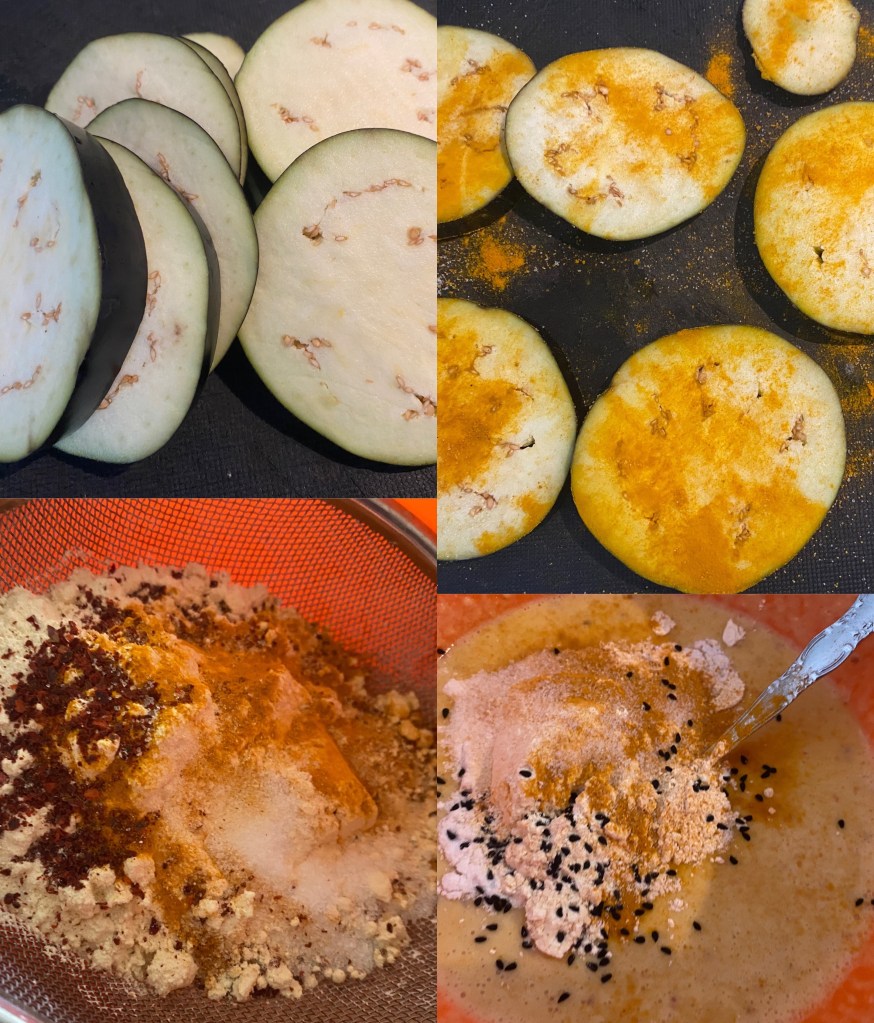
- In a large bowl, add a strainer and pour in the gram flour (besan), rice flour, turmeric powder, sugar, red chili powder, cumin powder, coriander powder, and salt. Mix well.
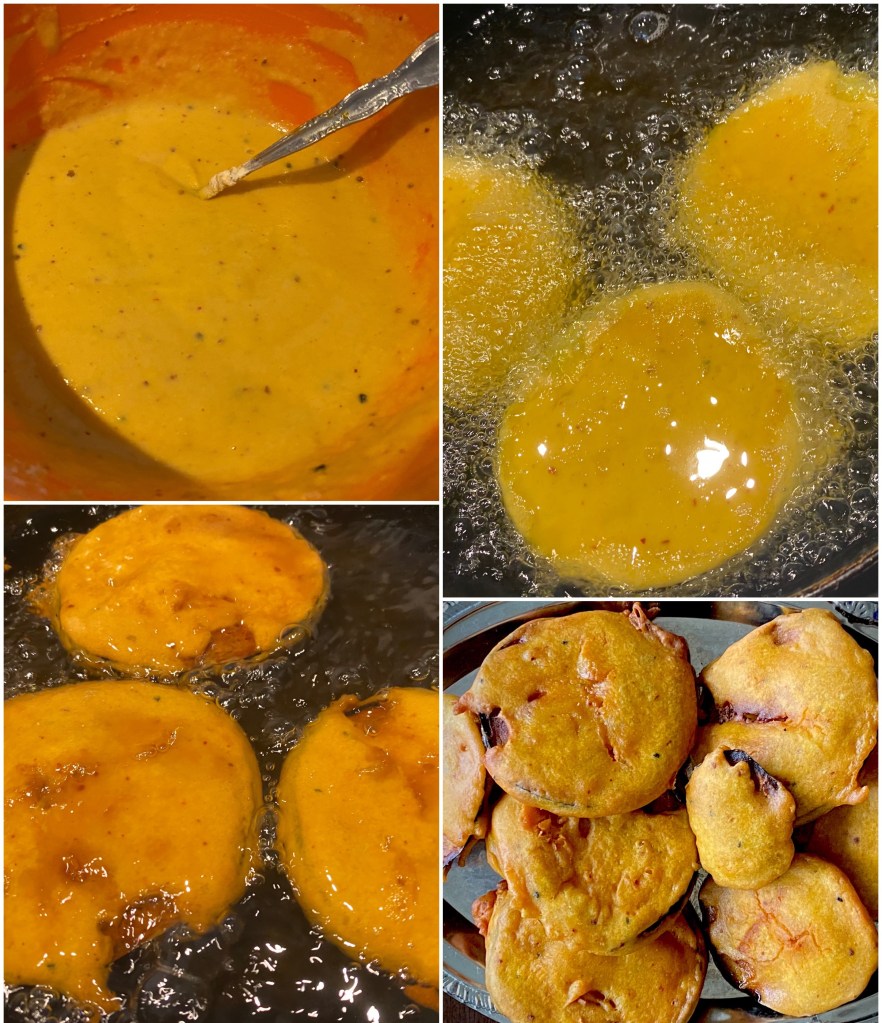
- Gradually add room temperature water to the dry ingredients, whisking continuously, until a smooth and thick batter is formed. The batter should be like a consistency similar to pancake batter-thick enough to coat the eggplant slices without dripping excessively.
- Rest the batter for 15-20 mins.
- While the batter is resting, wash the eggplant thoroughly.
- Trim the ends of the eggplant and slice it into thin rounds, approximately ¼ inch thick.
- In a large bowl of water add some salt. Soak the eggplant slices and let it rest for 10 mins. Pat the eggplants dry with paper towels.
- Heat mustard oil in a deep pan or kadai over medium heat.
- Add in 2 tbsp of the hot oil into the beguni batter and baking soda. Whisk again.
- Take an eggplant slice and dip it into the prepared batter, ensuring that both sides are evenly coated.
- Gently slide the coated slice into the hot oil, making sure not to overcrowd the pan. Fry a few slices at a time for about 3-4 minutes, or until they turn golden brown and crispy.
- Use a slotted spoon or tongs to remove the fried Beguni from the oil and transfer them to a plate lined with paper towels to absorb excess oil.
- Repeat the process with the remaining eggplant slices and batter until all the Beguni is fried, ensuring the oil is at the proper temperature before adding each batch.
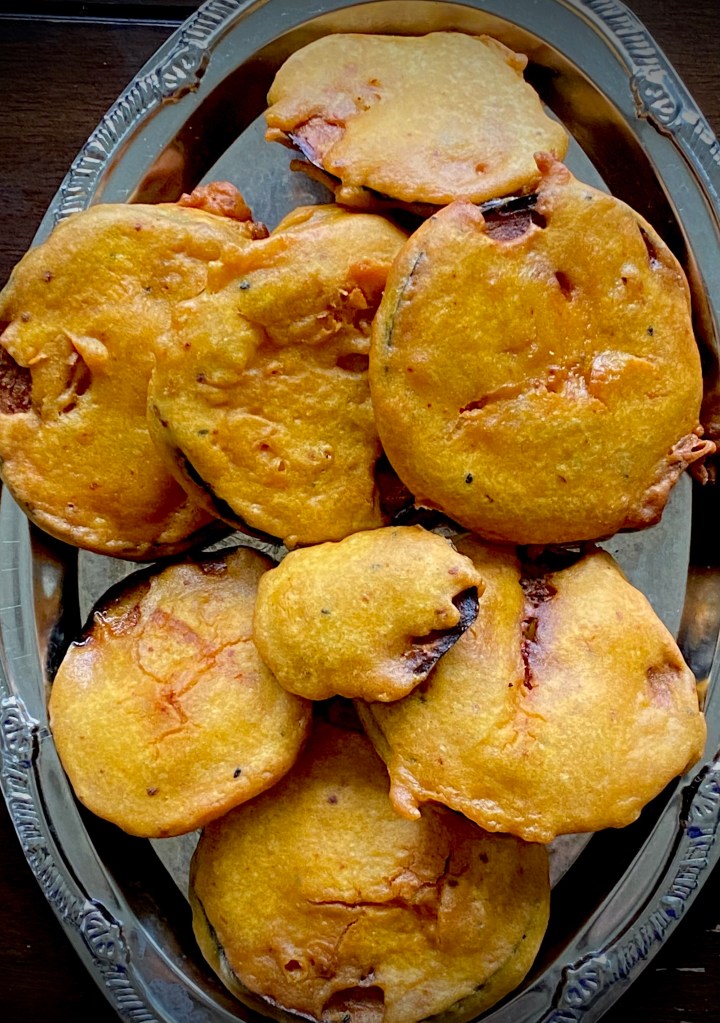
- Arrange the hot and crispy Beguni on a serving platter.
- Serve the hot and crispy Beguni immediately, as a snack with some Masala Tea or as part of a larger Bengali feast.
Notes
Beguni works so well with a steaming cup of masala chai for a perfect teatime indulgence. The crispy texture and spicy flavors beautifully complement the warmth of the aromatic tea.
Serve Beguni as part of a traditional Bengali meal alongside dishes like rice, dal (lentils), vegetable curry, and a tangy chutney. The combination of flavors and textures creates a harmonious culinary experience.
Serve Beguni street food style with a sprinkle of chaat masala, a squeeze of lemon juice, and a drizzle of tangy tamarind chutney for an explosion of flavors.
One of the most authentic ways of serving Beguni is with a puffed rice mixture with a little bit of mustard oil, green chilies, chanachur, and badam bhaja.
Mustard oil lends a distinct flavor to Beguni, enhancing its authenticity.
Use poppy seeds or carom seeds in place of nigella seeds.
Baking soda is an alkaline ingredient that creates carbon dioxide gas when it reacts with an acid (such as yogurt or lemon juice) or even moisture in the batter. This gas production leads to tiny air pockets in the batter, resulting in a lighter and crispier texture when the beguni is deep-fried.
Do not use more than ¼ tsp of baking soda, as excessive baking soda can result in an unpleasant taste and texture. A little goes a long way, so be cautious and only use a small amount to achieve the desired crispiness without compromising the flavor of your beguni.
To make Beguni really crispy, follow these tips
- Slice the eggplant thinly. Thinner slices tend to get crisper during frying.
- After slicing and soaking, pat the eggplant slices dry with a paper towel to remove excess moisture. Moisture can cause sogginess in the beguni.
- Make a smooth, lump-free batter thick enough to coat the back of a spoon. A smooth batter helps ensure even coating.
- Let the batter rest for about 15-20 minutes. This helps the flour absorb the liquid and can make it adhere better to the vegetables.
- For deep frying beguni, aim for an oil temperature of around 350-375°F (175-190°C). Use a deep, heavy-bottomed pan for even heating.
- Dip each vegetable slice into the batter, ensuring it is coated evenly. Shake off any excess batter to prevent clumps from forming.
- Fry the coated slices in small batches to prevent overcrowding, which can lead to a decrease in temperature and less crispy results.
- Allow the slices to cook on one side until they turn golden brown and crisp. Avoid flipping them too soon, as this can cause the coating to break or become soggy.
- After frying, place the beguni on a paper towel-lined plate or a wire rack to drain excess oil. This helps maintain their crispiness.
- Serve the beguni as soon as possible. The longer they sit, the more likely they will lose their crispness.
If you try a recipe, please use the hashtag #sarchakra on INSTAGRAM for a chance to be featured!
FOLLOW SARCHAKRA ON FACEBOOK| INSTAGRAM | PINTEREST | TWITTER I TIKTOK FOR ALL OF THE LATEST CONTENT, RECIPES AND UPDATES.

 sarchakra
This looks wonderful! A great, educational post.
LikeLiked by 1 person
Thanks so much. Its a family favorite.
LikeLike