Rose water and rose syrup came into Indian cuisine largely through Mughal influence, though the love for roses predates that era. The ancient Indians valued roses for their fragrance and medicinal qualities. Texts in Ayurveda mention gulab for cooling the body and lifting the mood. But it was during the Mughal period (16th-18th C) that the Mughals, with their Persian roots, brought an affinity for aromatic distillations, garden culture, and perfumed food. They used gulab jal (rose water) to scent everything from meats to sweets, sherbets, as well as rice dishes. The idea was not just flavor, but atmosphere as food was meant to smell as beautiful as it looked. Distilling rose petals into water or syrup was a way of bottling that sensual, royal fragrance. Over time, what began as a courtly indulgence became part of everyday Indian refreshment. This is especially true in North India, where summer drinks like lassi, falooda, and sharbat often carry that faintly floral signature of Mughal opulence.
Rooh Afza (not an advertisement) is a cultural icon when it comes to rose-based drinks in South Asia. Created in 1907 by Hakim Hafiz Abdul Majeed in Delhi, it was originally conceived as a herbal summer tonic, drawing heavily from Unani medicine principles. It was a cooling, restorative syrup meant to balance the body’s heat during long, dry months. The name itself translates roughly to ‘refresher of the soul,’ which captures its purpose perfectly. It was a complex, botanical, layered formula rather than a simple syrup. It used to be a blend, a herbal mix- rose distillate formed the base, but it was layered with chicory, borage, screw pine (kewra), vetiver, orange, sandalwood, coriander, mint, and various herbs and fruits like carrots, watermelon in it’s original foundation. That’s what gave it that unmistakable, almost nostalgic complexity of sweet, floral and slightly earthy. Over time, it’s become a symbol of comfort and tradition although the recent concoctions have less favourable ingredients like refined sugar and color. The drink is now more a commercial syrup but you can still add rose water, kewra and herbs to give it that authentic flavor. Simply mix into chilled milk, lassi, or falooda, or stir into cold water over ice. Try this easy and quick light refreshing drink that says calm indulgence @sarchakra
PREP TIME: 5 mins
COOK TIME: 0
SERVES: 6
Ingredients
- Whole Milk Greek yogurt 4 cups
- Rooh Afza ½ cup, adjust for sweetness and color)
- Sugar or honey 2 tbsp (optional, depending on taste)
- Rose water 2 tsp
- Salt a pinch
- Crushed rose petals for garnish
- Chopped pistachios or almonds for garnish
Method
- In a large bowl, whisk together the yogurt, Rooh Afza, sugar, rose water, and salt until smooth and slightly frothy.
- Taste and adjust – if you want a deeper rose flavor, add a little more Rooh Afza.
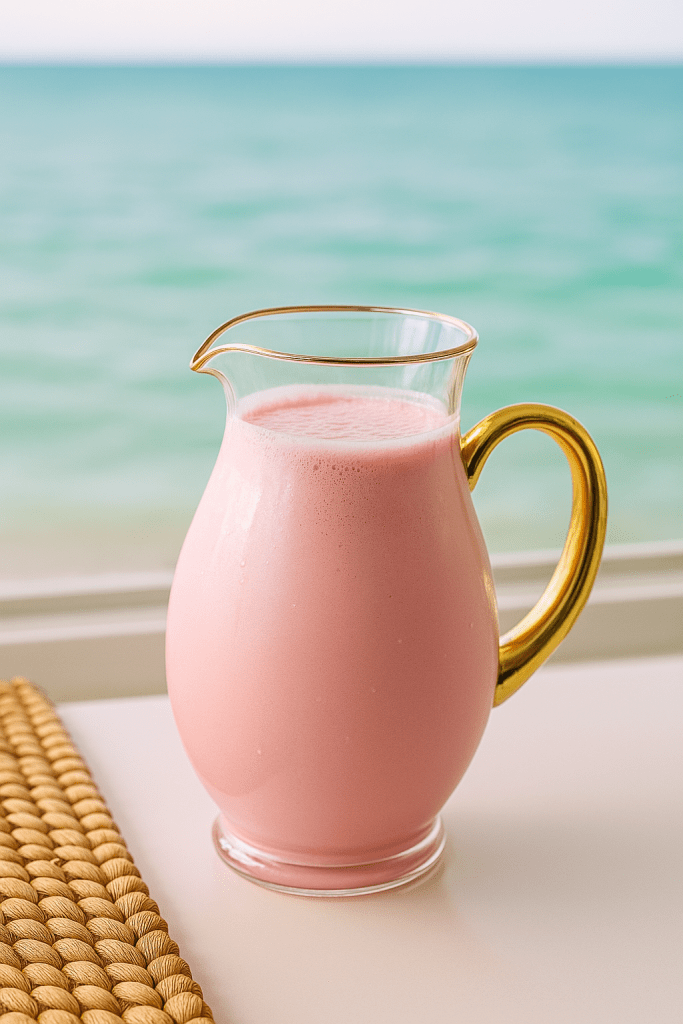
- Pour into a jug or bottle, cover tightly, and refrigerate overnight.
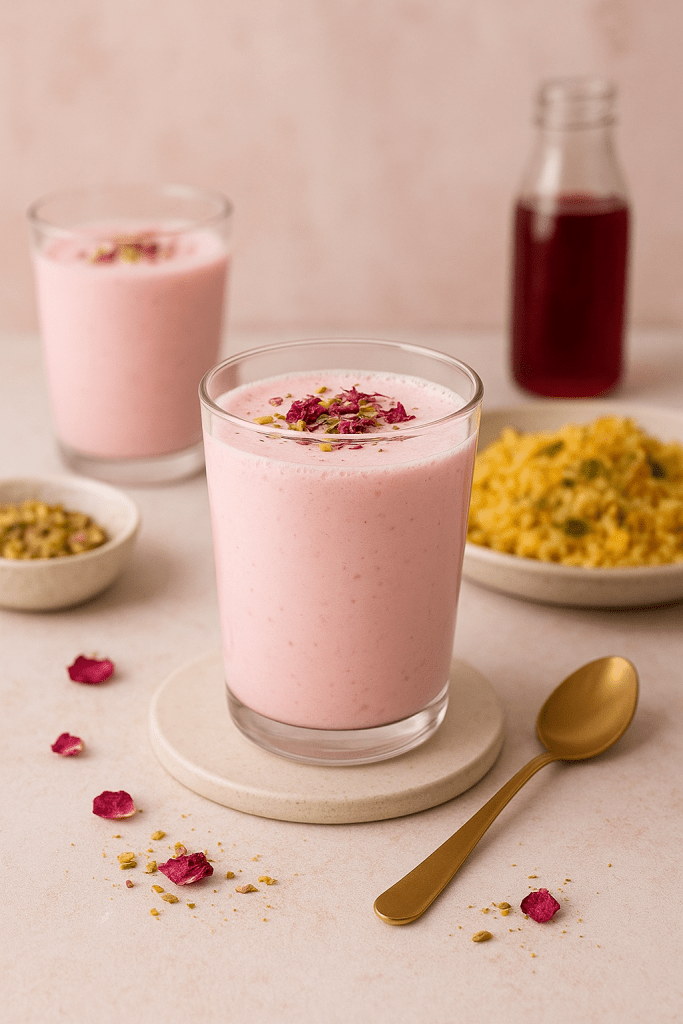
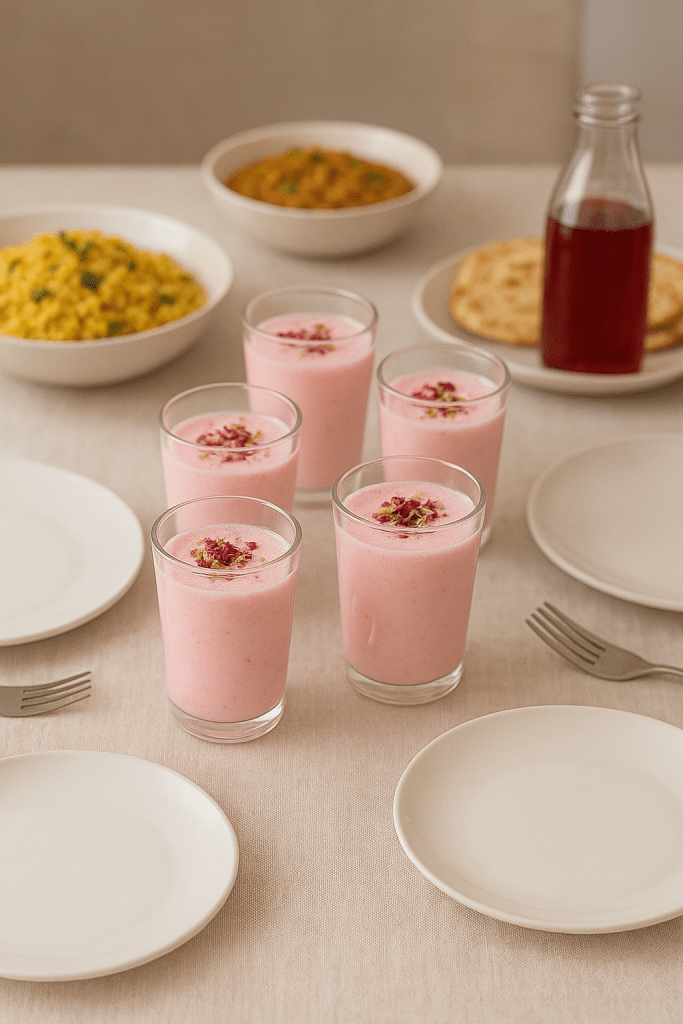
- Before serving, whisk again to fluff it up and pour into chilled glasses.
- Garnish with rose petals, slivered almonds or chopped pistachios.
Notes
The rose water is optional but it adds depth to the lassi. The salt balances the sweetness beautifully.
If you try a recipe, please use the hashtag #sarchakra on INSTAGRAM for a chance to be featured!
FOLLOW SARCHAKRA ON FACEBOOK| INSTAGRAM | PINTEREST | TWITTER I TIKTOK FOR ALL OF THE LATEST CONTENT, RECIPES AND UPDATES.
 sarchakra