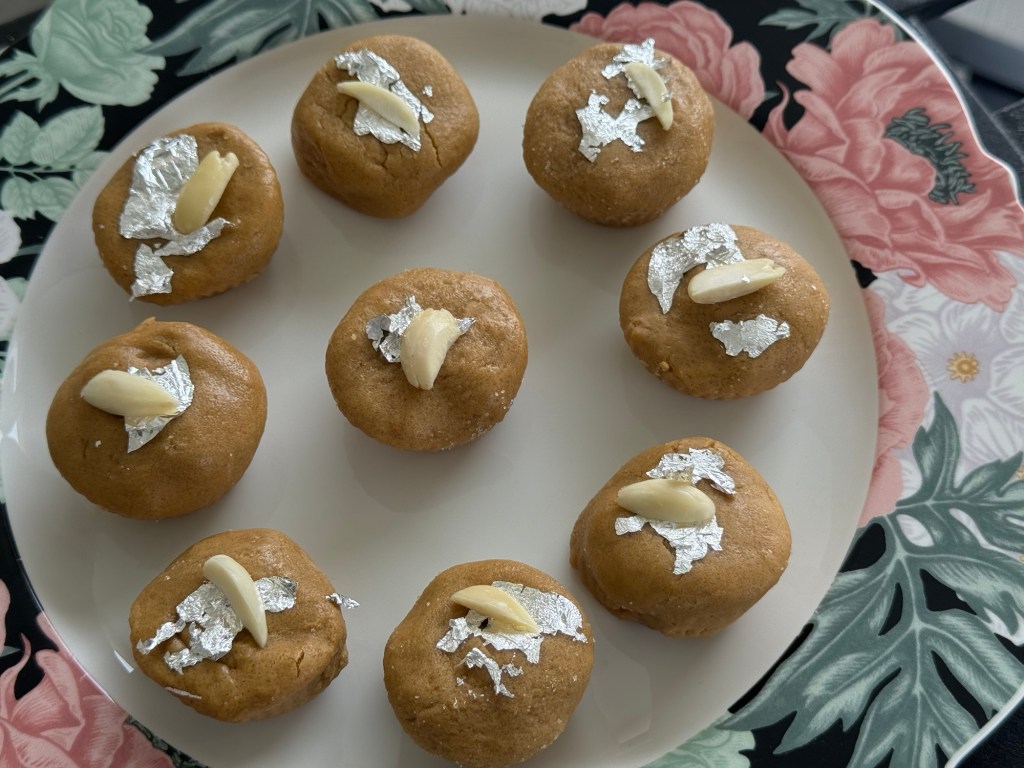
Besan Laddu, a popular Indian sweet is made primarily from gram flour (besan), sugar, and ghee and is known for its rich, nutty and melt-in-your-mouth texture. Besan-based sweets have been part of Indian cuisine for centuries, especially in North India, where gram flour is a staple ingredient in both savory and sweet dishes. Laddus as a broader category of sweet, has been mentioned in ancient texts and scriptures like the Puranas and were often offered in temples during religious ceremonies. While there is no specific date or place tied to the first creation of besan laddu, it is closely linked with the Mughal era (16th to 18th century) when the refinement of Indian sweets flourished under royal patronage. The use of gram flour (besan) in sweets is also reflective of traditional Indian agrarian practices, where pulses and legumes, including chickpeas (from which besan is derived), were cultivated and used in everyday cooking. The making of laddus are also linked to Ayurvedic traditions where they were prepared with wholesome ingredients like chick pea flour, ghee and jaggery, all nourishing and health promoting ingredients. Cardamom and ghee were also believed to aid digestion and provide strength. The sweet became especially popular in North India, where it was prepared during festivals like Diwali, Raksha Bandhan, Holi, and weddings. Its rich taste, simple ingredients, and relatively long shelf life made it a favored treat in households and sweet shops across the region. For a traditional Besan Laddu that takes a little more time, check out Besan Laddu This recipe is a much quicker version and slightly healthier as it needs a lot less ghee than the original recipe.
PREP TIME: 5 mins plus rolling the balls
COOK TIME: 15 mins
SERVES: Makes 9
Ingredients
- Gram flour (besan) 1 cup
- Confectioners sugar ¾ cup
- Green cardamom powder 1 tsp
- Clarified butter (ghee) 6 tbsp
- Silver leaf for decoration
- Almonds slivered as needed
Method
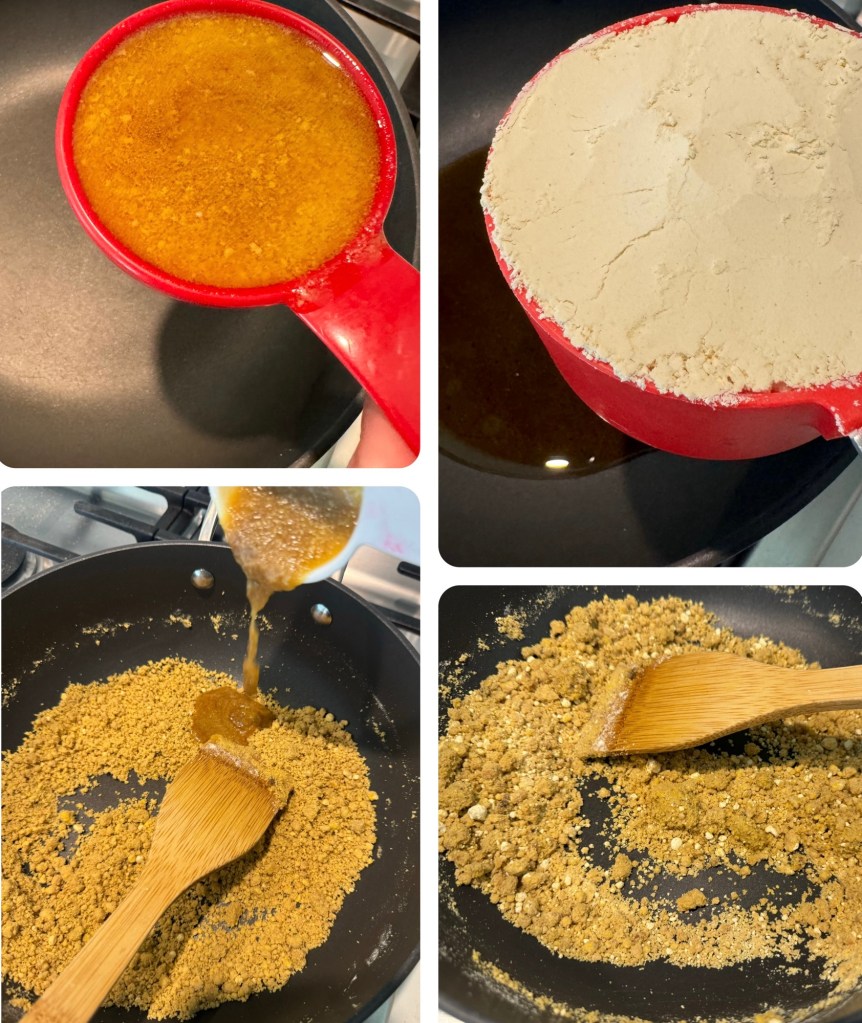
- In a thick-bottomed pan or kadhai, heat the ghee on low to medium flame. Make sure the ghee melts but does not become too hot (it should not smoke).
- Gradually add the besan and the cardamom powder to the melted ghee, stirring continuously to prevent lumps from forming.
- Keep stirring the besan continuously on low heat. Be patient during this process, as the besan needs to be roasted evenly to get rid of the raw smell. Initially, the besan will be dry and slightly lumpy, but as it roasts, it will absorb the ghee and become smooth.
- After 10 minutes of roasting, the besan will start to change color to a light golden brown, and you will notice a nutty aroma. This is a sign that the besan is fully roasted. Be careful not to over-roast, as it can turn bitter.
- Once the besan is roasted, take the pan off the heat and let the mixture cool slightly. The mixture should be warm but not too hot when adding sugar, as hot besan can melt the sugar and affect the texture.
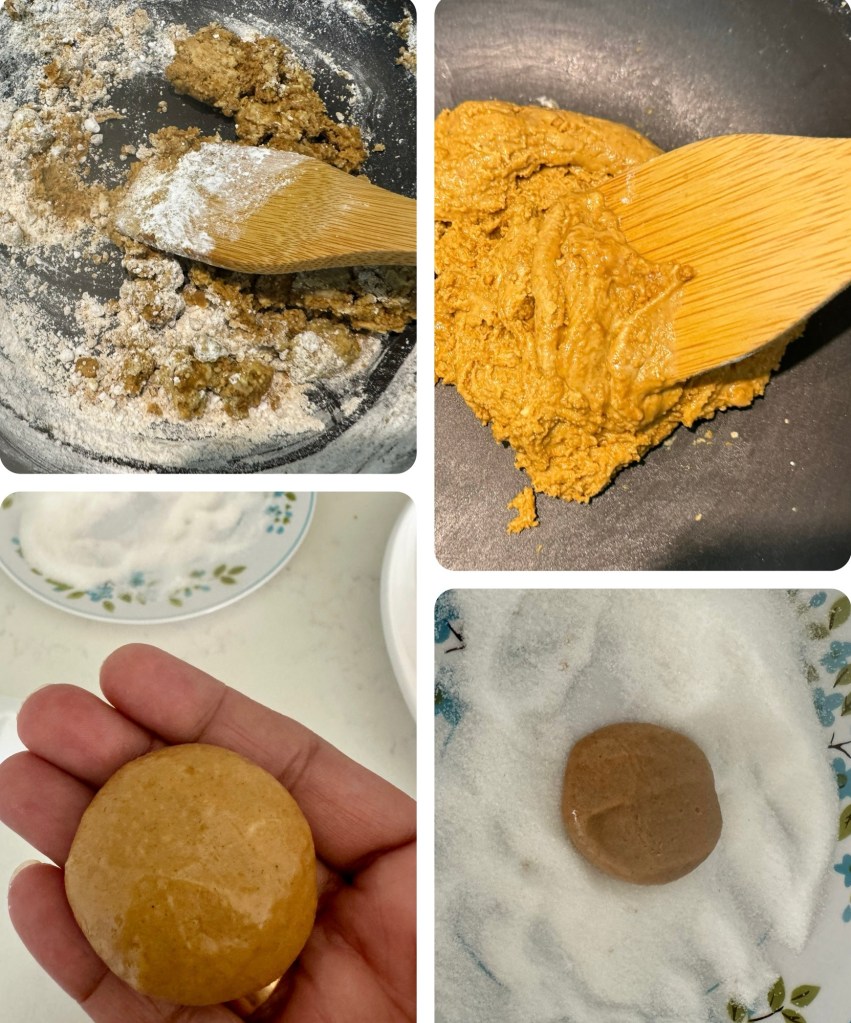
- Sift the confectioners sugar to remove any lumps and add it to the warm besan mixture. Mix well until the sugar is fully incorporated. The mixture will begin to thicken as the sugar blends in.
- Let the mixture cool just enough to handle. The warmth will help in shaping the laddus.
- Grease your palms with a little ghee. Take small portions of the mixture and roll them between your palms to form smooth, round balls (laddus).
- The size of the laddus can be as per your preference, usually about 1 to 1.5 inches in diameter.
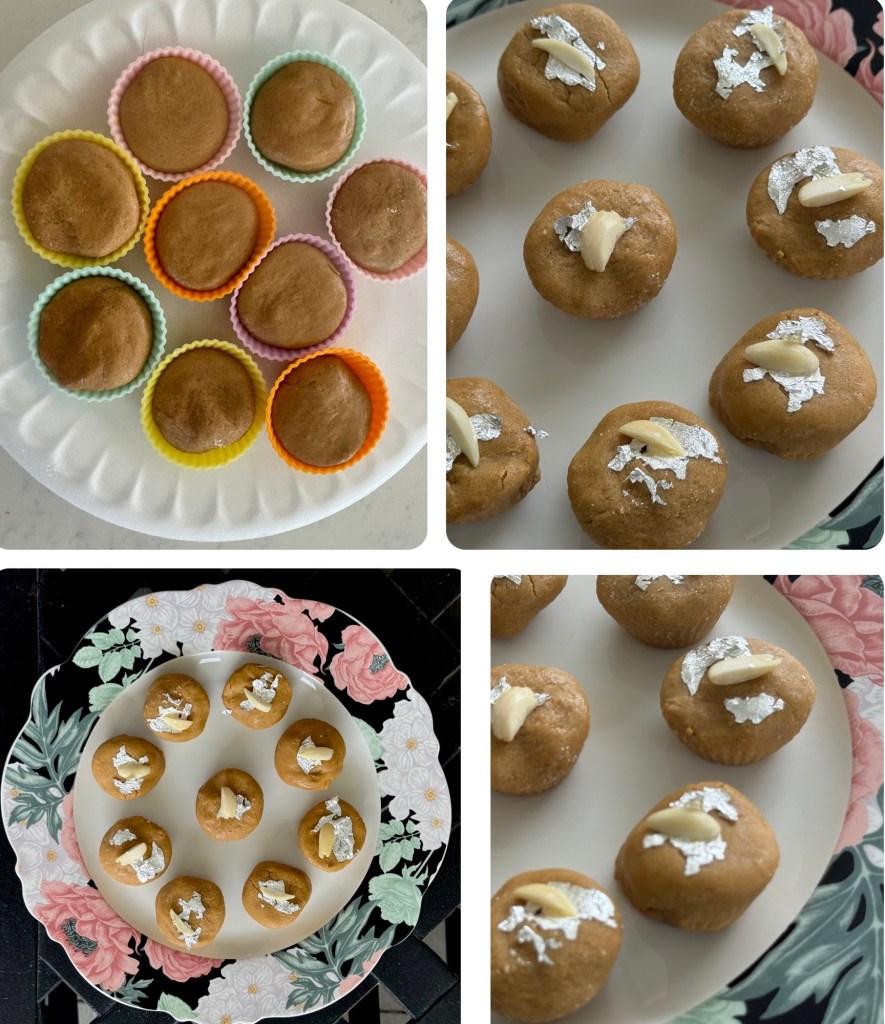
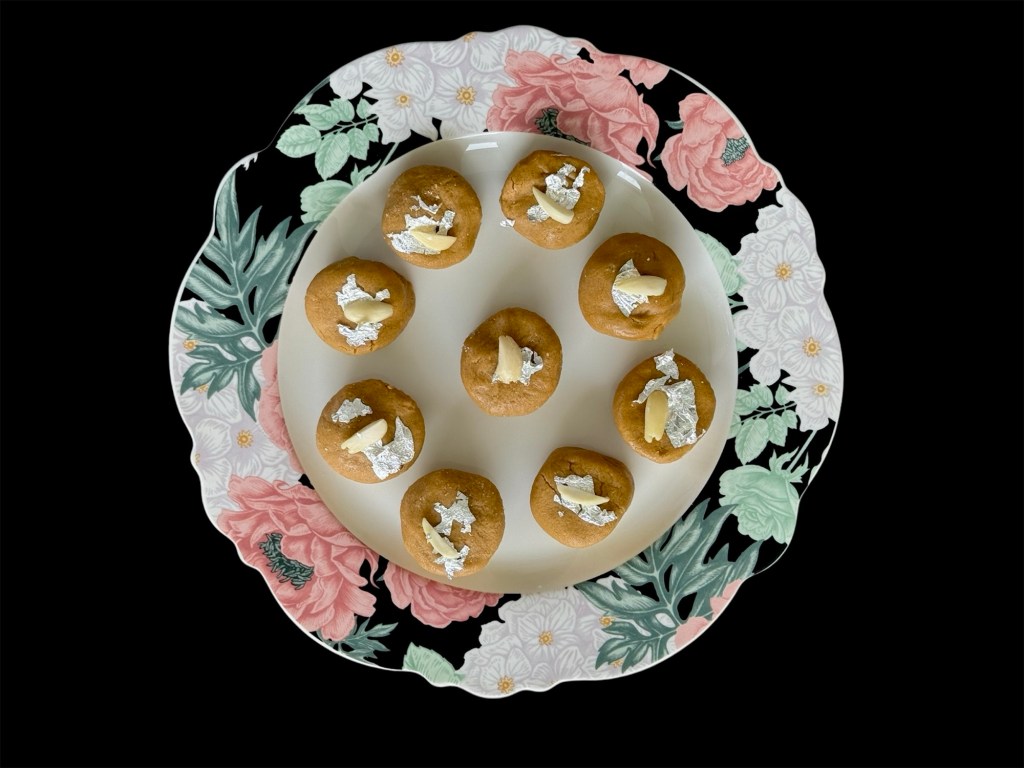
- Press some sliver leaf and a piece of almond on top of each laddu for added decoration.
- Once all the laddus are shaped, allow them to cool completely at room temperature. Once cooled, store them in an airtight container.
- Besan laddus can stay fresh for up to 2-3 weeks when stored in a cool, dry place.
Notes
- The key to delicious besan laddus is roasting the besan properly. Roasting the besan slowly in ghee develops that deep, nutty aroma and flavor.This process is crucial as it enhances the tastes and removes any raw flavor. If under-roasted, it will leave a raw taste, and if over-roasted, it may turn bitter. Aim for a golden brown color and a nutty aroma.
- The use of ghee (clarified butter) adds a rich, buttery taste and helps bind the ingredients together, giving the laddu that melt-in-your-mouth consistency.
- Cardamom adds a subtle fragrance and complexity.
- Make sure the besan mixture is warm, not hot, when adding sugar, as too much heat will melt the sugar, leading to a grainy texture.
- The ratio of ghee to besan should be balanced. If there is too little ghee, the mixture will be dry and difficult to roll into laddus. If there is too much ghee, the laddus will be greasy.
- If the mixture is too soft to shape into laddus, let it cool for a few more minutes. If it’s too dry, add a tablespoon of warm melted ghee and mix again.
Variations
Kesar Besan Barfi: This variation includes saffron strands (kesar) soaked in warm milk or water, giving the barfi a rich yellow hue and a fragrant aroma.
Chocolate Besan Barfi: A modern twist that includes cocoa powder or melted chocolate, giving the traditional sweet a chocolaty flavor.
Coconut Besan Barfi: Adding grated coconut to the besan mixture gives the barfi a sweet, nutty flavor and enhances its texture.
Dry Fruit Besan Barfi: Finely chopped almonds, cashews, and pistachios are added for texture and richness. This is especially popular during festive seasons.
Pistachio and Cardamom Besan Barfi: Adding crushed pistachios and ground cardamom to the recipe gives it a distinctive flavor.
Presentation
Layering with Different Flavors: For a more modern presentation, besan laddu can be layered with other flavors like chocolate or kesar. Each layer can be set separately, giving the laddu a unique appearance and flavor profile.
Molded Shapes: Instead of traditional square cuts, besan laddu can be molded into unique shapes using cookie cutters or silicone molds, such as stars, flowers, or hearts. This would be especially appealing for parties and festivals.
Garnished with Edible Gold or Silver Leaf (Varak): To give the barfi a royal and festive look, it can be garnished with edible gold or silver leaf, a common practice in Indian sweets to symbolize prosperity and luxury.
Besan Barfi Shots: A contemporary serving method could be in shot glasses. Layers of besan barfi with chocolate sauce or flavored cream can be served in shot glasses for a fun, party-friendly presentation.
Crumbled Barfi Over Ice Cream: For a fusion dessert, besan barfi can be crumbled and served as a topping over vanilla or saffron ice cream.
Mini Barfi Sandwiches: Small squares of besan barfi can be sandwiched with layers of flavored cream or chocolate ganache, creating bite-sized sweets that are appealing to a younger audience.
If you try a recipe, please use the hashtag #sarchakra on INSTAGRAM for a chance to be featured!
FOLLOW SARCHAKRA ON FACEBOOK| INSTAGRAM | PINTEREST | TWITTER I TIKTOK FOR ALL OF THE LATEST CONTENT, RECIPES AND UPDATES.

 sarchakra